
Battery Management System: A Complete Buyer's Guide
Battery Management System: A Complete Buyer's Guide
A battery management system (BMS) is the electronic control unit that monitors, protects, and balances a lithium battery pack. For buyers sourcing electric vehicle components, the BMS is rarely a commodity line item. It is the part that decides whether a pack is safe, how far a vehicle travels on one charge, and how long the pack survives in the field. This guide explains what a BMS does, how BMS manufacturers differ, and what to compare before you commit to a supplier.
The material below is written for importers, OEM vehicle integrators, battery-pack assemblers, and procurement teams evaluating BMS options for electric two-wheelers, three-wheelers, low-speed four-wheelers, electric motorcycles, and light industrial platforms. It pulls together first-party product data from Pengpai Energy with verifiable third-party market and regulatory context for 2026.
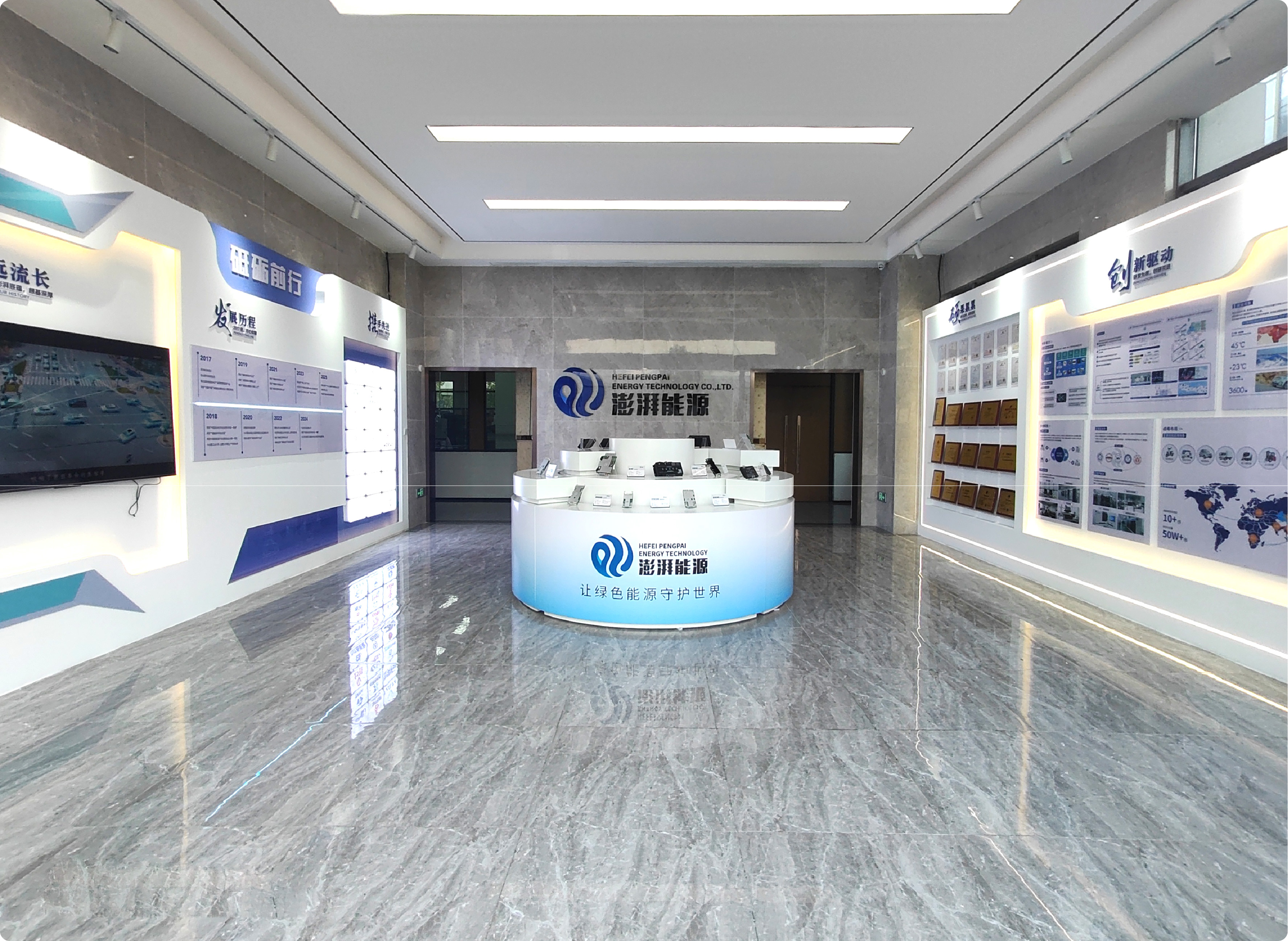
Pengpai Energy product showroom — BMS hardware for light-power electric vehicle platforms.
What Is a Battery Management System?
A battery management system is the electronic controller inside a lithium battery pack that continuously monitors cell voltage, current, and temperature. Sunlithenergy describes the BMS as "the electronic brain inside every lithium battery pack," and Zebra Technologies defines it as an electronic system that manages a rechargeable battery by protecting it from over-voltage, under-voltage, and over-current.
In a battery energy storage context, the U.S. Department of Energy describes the BMS as both a hardware and software component that connects to the energy management system (EMS) and power conversion system (PCS) to manage system charge. That framing matters for EV buyers too: a traction BMS is not a single chip, but a hardware-plus-firmware subsystem that governs how a pack behaves across its entire service life.
In practice, a BMS performs five core jobs:
- Monitoring — reading cell voltages, pack current, and NTC temperature channels
- Protection — cutting or limiting current when over-charge, over-discharge, over-current, over-temperature, or short-circuit conditions appear
- Balancing — equalizing cell voltages so the weakest cell does not limit the whole pack
- State estimation — calculating SOC (state of charge), SOH (state of health), and SOP (state of power)
- Communication — reporting pack data to vehicle controllers, chargers, displays, or cloud platforms
Why BMS Selection Is a Make-or-Break Decision
The battery is usually the single most expensive component in an electric vehicle. The BMS is a much smaller cost line, but it controls the outcome of everything around it. A poorly specified BMS shows up in three ways:
- Safety events. Cells pushed past their voltage or temperature limits can vent, catch fire, or fail catastrophically. Protection logic is not optional — it is the minimum risk control.
- Range and performance complaints. Poor SOC estimation misleads the driver, causes premature power derating, or triggers false low-battery warnings. Poor balancing accelerates pack degradation.
- Field warranty and replacement cost. A BMS that cannot store fault records or communicate diagnostic data leaves you blind during warranty claims.
For buyers in regulated markets, there is a fourth factor: compliance. In India, AIS-156 establishes mandatory safety requirements for lithium-ion battery packs and battery management systems used in electric two-wheelers and three-wheelers. A BMS that does not support the required protective functions or documentation can block vehicle certification, not just reduce performance.
Industry Background: The BMS Manufacturing Landscape in 2026
Two forces are shaping the BMS supply landscape right now: rapid market growth in EV-heavy regions, and tighter regulation of lithium battery safety.
On market size, the India battery management system market was valued at USD 327.9 million in 2025 and is expected to reach USD 1,347.6 million by 2034, according to IMARC Group. That trajectory is driven by electric two-wheeler, three-wheeler, and e-rickshaw volumes, where the battery pack is the dominant cost center and the BMS is the component most exposed to regulatory scrutiny.
On supply structure, the market is served by a mix of chip-level solution providers, Tier-1 battery manufacturers building BMS in-house, and specialized BMS suppliers. In September 2026, LeSol Group partnered with China-based Hefei Pengpai Energy Technology Co. Ltd to develop localized BMS solutions for the Indian market, with an initial focus on two- and three-wheelers — a signal that localized BMS supply is becoming a competitive requirement rather than a nice-to-have.
Global market-size estimates for BMS vary widely across commercial research publishers and are not consistent enough to treat as a single reliable figure. Buyers evaluating market entry or capacity should verify those numbers against primary sources before making investment commitments.
What a Modern EV Battery Management System Must Do
Specification sheets vary, but a capable EV traction BMS covers the following functional blocks. Each block maps to a buyer question you should be able to answer before approving a supplier.
1. Voltage and current handling
The BMS must match the pack's series count and expected load profile. A two-wheeler commuter pack and a low-speed four-wheeler pack sit in completely different current regimes.
2. Cell chemistry compatibility
NCM, LMO, LCO, and LFP have different voltage curves and safety envelopes. The BMS firmware and protection thresholds must be configured for the chemistry actually used, not a generic profile.
3. Protection functions
At minimum: over-charge, over-discharge, over-current, over-temperature, and short-circuit protection. Higher-spec systems add insulation detection, high-voltage interlock protection, under-voltage protection, and pre-charge control.
4. State estimation accuracy
SOC error is usually expressed as a percentage at 25°C. Tighter SOC error means more usable range and fewer false alarms. SOH accuracy affects warranty and second-life decisions.
5. Communication interfaces
CAN bus, RS485, Bluetooth, TTL, and single-wire interfaces serve different system architectures. CAN Bus BMS designs are common on vehicle platforms with a central VCU; Bluetooth-first designs dominate shared-mobility and delivery fleets.
6. Balancing and thermal management
Passive balancing current determines how quickly cell drift is corrected between charge cycles. External NTC channels determine how well the BMS can see thermal hot spots inside the pack.
7. Diagnostics and data logging
Fault-record storage matters for warranty disputes and field troubleshooting. Connectivity to APP, PC, or IoT platforms enables remote monitoring at fleet scale.
BMS Categories by Electric Vehicle Platform
"BMS" is not one product. Buyers should match the category to the vehicle platform.
Electric Two-Wheeler BMS and Electric Motorcycle BMS
These packs typically operate at lower continuous currents and need compact housings. Shared-mobility and battery-swap applications place a premium on Bluetooth connectivity, short-circuit wake-up, and fast fault reporting.
Electric Three-Wheeler BMS and India E-Rickshaw BMS
Three-wheeler and e-rickshaw packs sit between two-wheeler and low-speed four-wheeler loads. Duty cycles are long, ambient temperatures are high, and payload-driven current spikes are common. Protection robustness and thermal headroom matter more than peak performance claims.
Electric Four-Wheeler BMS and Low-Speed Vehicle BMS
Larger series counts, higher continuous current, and multi-channel relay output. These systems typically need isolated CAN, insulation detection, and high-voltage interlock protection.
BMS for AGV and Industrial Vehicles
Industrial applications value diagnostic depth, deterministic communication, and long service life over weight and cost optimization. Communication reliability and fault logging are the primary selection criteria.
Lithium Battery Management System for Energy Storage
Energy storage BMS designs share protection and balancing logic with traction BMS, but add wider voltage platforms and master-slave expansion for larger banks.
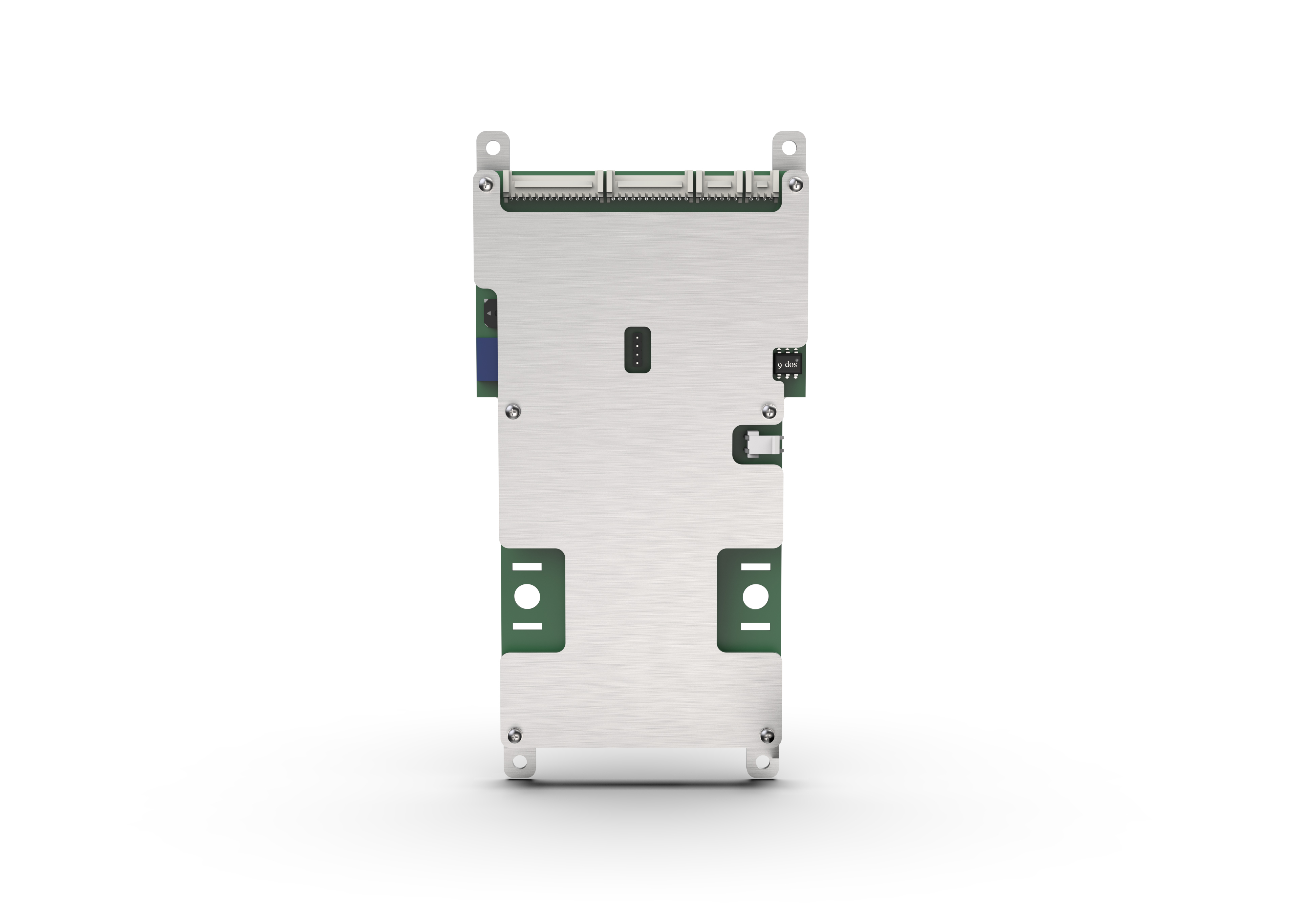
DTH2505 — a BMS platform covering the two-wheeler, three-wheeler, low-speed four-wheeler, electric motorcycle and shared-mobility categories.
Inside a BMS Manufacturer's Product Range: Pengpai Energy
Hefei Pengpai Energy Technology Co., Ltd. (Pengpai Energy) is a national high-tech enterprise established in 2017, specializing in the R&D, manufacturing, sales, and service of new energy battery management systems and intelligent energy management platforms. The company's main products are new energy vehicle battery management systems for electric two-wheelers, three-wheelers, and low-speed four-wheelers, and its publicly listed BMS models include the B2107, DTH2411, DTH2302, DTH2410, and B2003 series.
Several first-party facts are useful for buyers building a supplier shortlist:
- Manufacturing footprint: a 2,500 m² production facility, approximately 100 employees, and R&D engineers representing more than 60% of staff
- Annual output: approximately 800,000 BMS units per year, supporting volume supply programs
- Certification: ISO9001 quality management system certification; BMS products comply with CE and FCC international standards
- Intellectual property: full independent IP rights for BMS, including dozens of authorized invention patents, utility model patents, and software copyrights covering battery state estimation, safety protection algorithms, and intelligent energy scheduling
- Export footprint: approximately 60% of products exported, with marketing branches in Southeast Asia, India, North America, and Europe; major markets include China, India, Southeast Asia, North America, and Europe
- Testing: an R&D laboratory equipped for reliability, temperature, shock, and safety testing
That profile matters because it addresses three buyer concerns at once: whether the supplier can scale, whether certifications and IP are documented, and whether export and local-market support already exist for target regions such as India and Southeast Asia.
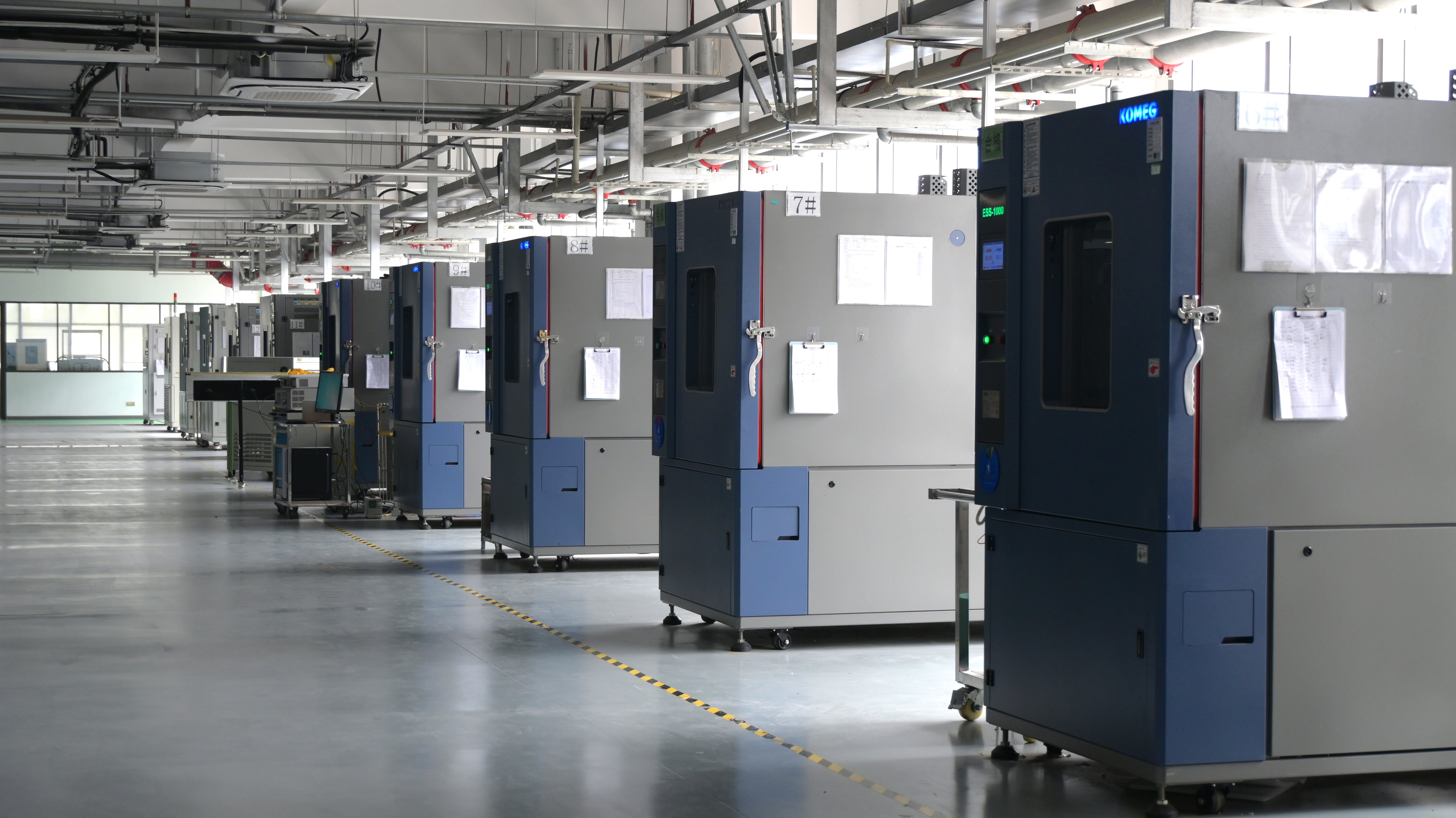
Pengpai Energy's 2,500 m² BMS manufacturing facility in Hefei, Anhui, China.
Step-by-Step: How to Evaluate a BMS Manufacturer
The following sequence works for most EV BMS sourcing decisions, from awareness-stage research through final supplier approval.
Step 1 — Define the electrical envelope before you talk to anyone
Lock down pack voltage platform, series count, continuous discharge current, peak current and duration, and cell chemistry. Vague requirements invite vague quotations. For example, a low-speed four-wheeler pack might need a 30–95V platform with 16S–24S configuration and 300A continuous current, while a two-wheeler pack might sit at 20–95V and 60A continuous.
Step 2 — Specify protection functions as a checklist
Write out every protection function you require and require the supplier to confirm each. Over-charge, over-discharge, over-current, over-temperature, and short-circuit protection are baseline. Insulation detection, high-voltage interlock protection, and under-voltage protection are appropriate for larger platforms. Pre-charge support matters on any system with significant capacitive load at connection.
Step 3 — Match communication interfaces to your vehicle architecture
If your VCU speaks CAN, confirm the BMS provides isolated CAN with the right protocol. If your fleet relies on a mobile app or cloud dashboard, confirm the Bluetooth or 4G-GPS options exist and are production-ready, not prototype features. TTL and single-wire options are still relevant in cost-sensitive two-wheeler and e-rickshaw designs.
Step 4 — Review state estimation data honestly
SOC error expressed as ≤5% or ≤8% at 25°C is a specification, not a guarantee. Ask under what conditions it was measured, and how it degrades at low temperature or under partial charge cycles. Matching estimation accuracy to your actual drive-cycle range matters more than chasing the lowest headline number.
Step 5 — Verify balancing and temperature channel capacity
Passive balancing current at 25°C and the number of external NTC channels determine how well the BMS can keep a pack healthy. Packs operating in high ambient temperatures or with irregular cell layouts generally need more temperature sensing, not fewer.
Step 6 — Confirm dimensional and mechanical fit
BMS boards are space-constrained components. Ask for dimensioned drawings and confirm connector type, enclosure material, and mounting approach against your pack design. Custom dimensions are common on high-volume programs.
Step 7 — Validate certifications, quality system, and IP ownership
ISO9001, CE, FCC, and applicable regional standards are the baseline. Ask specifically which certification applies to which product model, and confirm the supplier owns its BMS IP rather than licensing a black-box firmware stack that it cannot modify for you.
Step 8 — Confirm customization and integration capability
If your program requires OEM PCBA development or hardware-software co-engineering, confirm the supplier can customize against cell chemistry, series count, current, protocol, and operating conditions. Also confirm whether selected models can connect to APP, PC, IoT platforms, or displays for monitoring and software expansion.
Step 9 — Review supply capability and delivery commitments
Annual output capacity, existing export experience, and local support presence tell you whether the supplier can support your ramp. A supplier with marketing branches in your target region reduces lead-time and after-sales risk.
Step 10 — Request samples and validate before volume commitment
Bench validation against your actual pack and vehicle controller is the only reliable filter. Request samples under a defined test plan that covers protection trip points, SOC behavior, communication reliability, and thermal response.
Real-World BMS Applications
Pengpai Energy BMS platforms are used across a range of light-power applications. Rather than treat these as marketing categories, buyers can use them to sanity-check whether a given platform matches their operational reality.
- Food delivery and express & logistics. High daily cycle counts, quick swap or charge cycles, and Bluetooth-first diagnostics.
- Shared mobility. Battery-swap compatibility, short-circuit wake-up, and remote monitoring at fleet scale.
- Municipal sanitation and property management. Long low-speed duty cycles with intermittent high-load events; robust thermal protection is critical.
- Cultural tourism, smart scenic areas, hotels, resorts, theme parks. Low-speed four-wheeler and sightseeing vehicle platforms with multi-passenger loads and predictable daily routes.
- Golf course operations, healthcare and pension facilities, large-scale industrial parks. Low-speed, high-availability electric carts where downtime cost exceeds component cost.
- Energy storage integration and microgrids. Wider voltage platforms, master-slave expansion, and industrial communication protocols.
- Factory logistics and AGV-adjacent operations. Deterministic communication, insulation detection, and deep fault logging.

Typical BMS application scenarios across two-wheel, three-wheel, and low-speed vehicle platforms.
BMS Model Comparison Table
The table below compares publicly listed Pengpai Energy BMS models on the specifications buyers most often use as filtering criteria. All values are drawn from published product data.
| Model | Typical Platform | Voltage Platform | Cell Configuration | Current Handling | Communication | Balancing |
|---|---|---|---|---|---|---|
| DTH2505 | Two-wheeler, three-wheeler, low-speed four-wheeler, electric motorcycle, shared-mobility pack | 15–90V | 7S–24S | 50A–200A continuous (optional); 100A–400A/30s peak | Bluetooth (standard); CAN / RS485 (optional) | ≥150mA passive |
| PNRG-MA24S60 | Two-wheeler, three-wheeler, mini EV, light-duty equipment | 20–95V | 10S–24S | 60A continuous (40A optional); 120A/30s peak | Bluetooth (standard); TTL / One-wire / 4G-GPS (optional) | ≥50mA @3.3V |
| DTH2421 | Two-wheeler, mini EV, light-duty EV | 30–60V | 16S | 40A charge / 100A discharge; 210A/1s peak | Isolated CAN ×2 | ≥50mA @25℃ |
| DTH2302 | Mini EV, low-speed four-wheeler, sightseeing vehicle | 30–95V | 15S–24S | 200A continuous discharge; 400A/30s peak | RS485 ×2 | ≥50mA @25℃ |
| DTH2410 | Low-speed four-wheeler, sightseeing vehicle, golf cart | 30–95V | 16S–24S | 300A continuous; 400A/30s peak | Isolated CAN ×1, isolated RS485 ×2, Bluetooth ×1 | ≥50mA @25℃ |
| DTH2413 | Low-speed four-wheeler, mini EV, energy storage, sightseeing vehicle | 9–36V | 8S–32S | -500A ~ 500A detection | Isolated CAN ×2, RS485 ×1 | 50mA passive |
| B2107 | Mini EV, low-speed EV, energy storage, sightseeing vehicle | 0–48–60V | 8S–16S | -200A ~ 200A detection | CAN ×1, RS485 ×1 | 50mA passive |
| B2104 | Energy storage, low-speed EV, sightseeing vehicle, mini EV, master-slave systems | 0–800V (customizable) | 8S–48S (master-slave expandable) | -500A ~ 500A | CAN ×2, RS485 ×1 | 50mA passive |
Common to the range: NCM, LMO, LCO, and LFP chemistry support (except DTH2505, which supports NCM and LFP), single-cell voltage measurement in the 0–5V range, and optional connectivity to APP, PC, IoT platforms, or displays on selected models. Customized PCBA and integrated hardware-software development can be confirmed against cell chemistry, series count, current, protocol, and operating conditions.
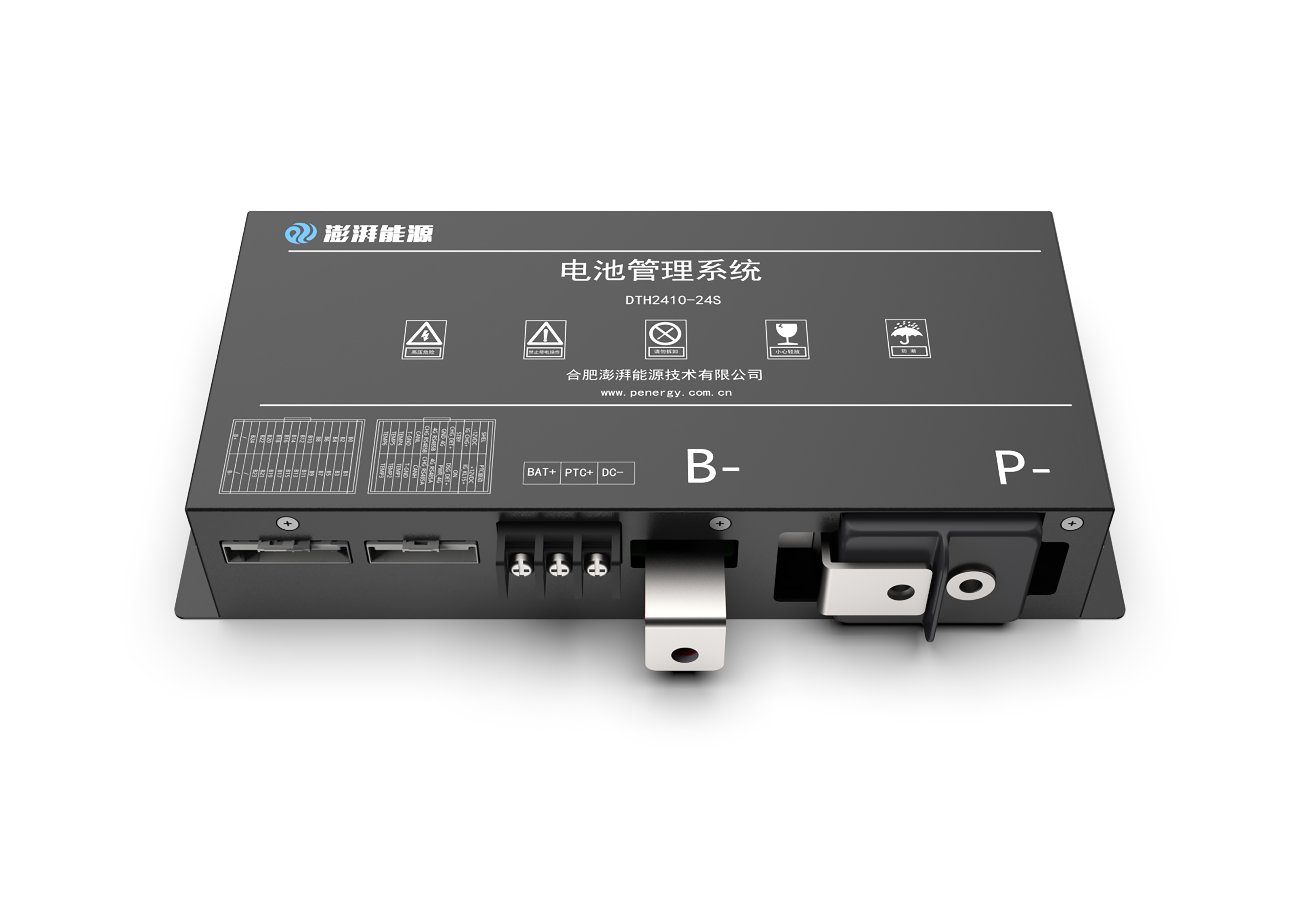
DTH2410 — designed for low-speed four-wheelers, sightseeing vehicles, and golf carts, with isolated CAN, isolated RS485, and Bluetooth.
Frequently Asked Questions
What certifications and quality standards should I look for in a battery management system supplier?
At minimum, look for an ISO9001 quality management system certification and product-level compliance such as CE and FCC for international delivery. For India specifically, AIS-156 establishes mandatory safety requirements for lithium-ion battery packs and BMS in L-category vehicles (two-wheelers and three-wheelers), so confirm the supplier can support that framework. Pengpai Energy holds ISO9001 certification, and its BMS products comply with CE and FCC standards.
Can a BMS be customized to my specific voltage, series count, and communication protocol?
Yes, for suppliers with in-house hardware and firmware capability. Pengpai Energy confirms customized PCBA and integrated hardware-software development against cell chemistry, series count, current, protocol, and operating conditions. Selected models can also connect to APP, PC, IoT platforms, or displays to support vehicle monitoring and software expansion. Customization depth is a useful differentiator between a component reseller and an actual BMS manufacturer.
Which BMS platform fits electric two-wheelers, three-wheelers, or low-speed four-wheelers?
Platform fit depends on the electrical envelope, not the vehicle category label. For two-wheeler and three-wheeler packs, models such as the DTH2505 (15–90V, 7S–24S, 50A–200A) and PNRG-MA24S60 (20–95V, 10S–24S, 60A) are typical. For low-speed four-wheelers, sightseeing vehicles, and golf carts, models such as the DTH2410 (30–95V, 16S–24S, 300A continuous) and DTH2413 (9–36V, 8S–32S, -500A ~ 500A) address higher current and multi-channel communication requirements.
Does a single BMS supplier support India and Southeast Asia markets?
Pengpai Energy's official product range covers two-wheelers, three-wheelers, low-speed four-wheelers, and electric motorcycles, and the company publicly identifies India and Southeast Asia as target markets, with marketing branches established in Southeast Asia, India, North America, and Europe. In September 2026, LeSol Group partnered with Hefei Pengpai Energy Technology Co. Ltd to develop localized BMS solutions for the Indian market, with an initial focus on two- and three-wheelers. Exact model selection should be confirmed against battery series count, voltage platform, current, communication protocol, cell chemistry, and vehicle control logic.
How do I request a BMS sample for evaluation before a volume order?
Start by preparing a written specification covering pack voltage platform, series count, continuous and peak current, cell chemistry, target communication protocol, and installation dimensions. Share that specification with the supplier, confirm the recommended model or custom configuration, then request samples under a defined test plan. Pengpai Energy supports sample evaluation and volume programs; buyers can contact the team at www.penergy.com.cn or email kaiquan.zheng@penergy.com.cn to begin a technical review.
Conclusion: Build the Specification Before You Build the Shortlist
A battery management system is a safety, performance, and compliance component, not a passive accessory. The buyers who get the best outcomes are the ones who define their electrical envelope, protection checklist, and communication requirements before they contact suppliers — then use those criteria to filter manufacturers on evidence rather than claims.
Three points worth carrying into your supplier evaluation:
- Match the platform, not the price tag. A 20–95V mini-EV BMS and a 0–800V master-slave energy storage BMS are not interchangeable, even if both are labelled "BMS."
- Verify certification and IP ownership. A supplier who owns its firmware can customize for you. A supplier who resells a black box cannot.
- Test before you commit. Bench validation against your actual pack and controller is the only reliable filter for protection behavior, SOC accuracy, and communication reliability.
Hefei Pengpai Energy Technology Co., Ltd. designs and manufactures BMS for light-power electric vehicle platforms, with publicly listed models covering two-wheeler, three-wheeler, low-speed four-wheeler, electric motorcycle, and energy storage applications. The company's 2,500 m² facility, approximately 800,000-unit annual output, ISO9001 certification, and CE/FCC-compliant BMS products are the kind of verifiable facts buyers should expect from a serious BMS manufacturer.
Next Step: Request a Sample or Technical Review
Send your pack specification — voltage platform, series count, continuous and peak current, cell chemistry, and required communication protocol — and the Pengpai Energy engineering team will recommend the closest standard model or a custom configuration.
📄 Download the Pengpai Energy BMS product catalog (PDF)
✉️ Email: kaiquan.zheng@penergy.com.cn | 🌐 Website: www.penergy.com.cn
📞 Tel: +86-0551-62628315 | 💬 WhatsApp: +86 133-3551-2050
📍 Building 6, Hongbaoshi Industrial Park, No. 3988 Xiyou Road, Hefei High-tech Zone, Anhui, China
Have Questions or Need More Details?
Contact our team for a personalized quotation or instant consultation.
Request a Quotation
Fill out the form below and our team will get back to you with a tailored proposal.
WhatsApp Direct Chat
Prefer to chat in real-time? Message us on WhatsApp for instant assistance & quick answers.
- Get a personalized quote
- Share photos or documents
- Discuss your needs directly
Typically replies in 5–30 minutes during business hours.