
What Is a Battery Management System? Light EV Buyer's Guide
What Is a Battery Management System? Light EV Buyer's Guide
A battery management system (BMS) is the electronic controller inside a lithium battery pack. It continuously monitors cell voltage, current and temperature, keeps the pack inside its safe operating limits, and reports the pack's condition to the rest of the vehicle.
For anyone buying electric two-wheelers, electric three-wheelers, low-speed four-wheelers or the battery packs behind them, the BMS is the component that receives the least attention during sourcing and creates the most expensive problems later. In regulated markets it is also the part that decides whether a battery pack can be placed on the market at all.
This guide explains what a BMS actually does in light electric vehicle applications, what published data on real products looks like, and how to turn a three-letter request for quotation into a specification you can compare and validate.
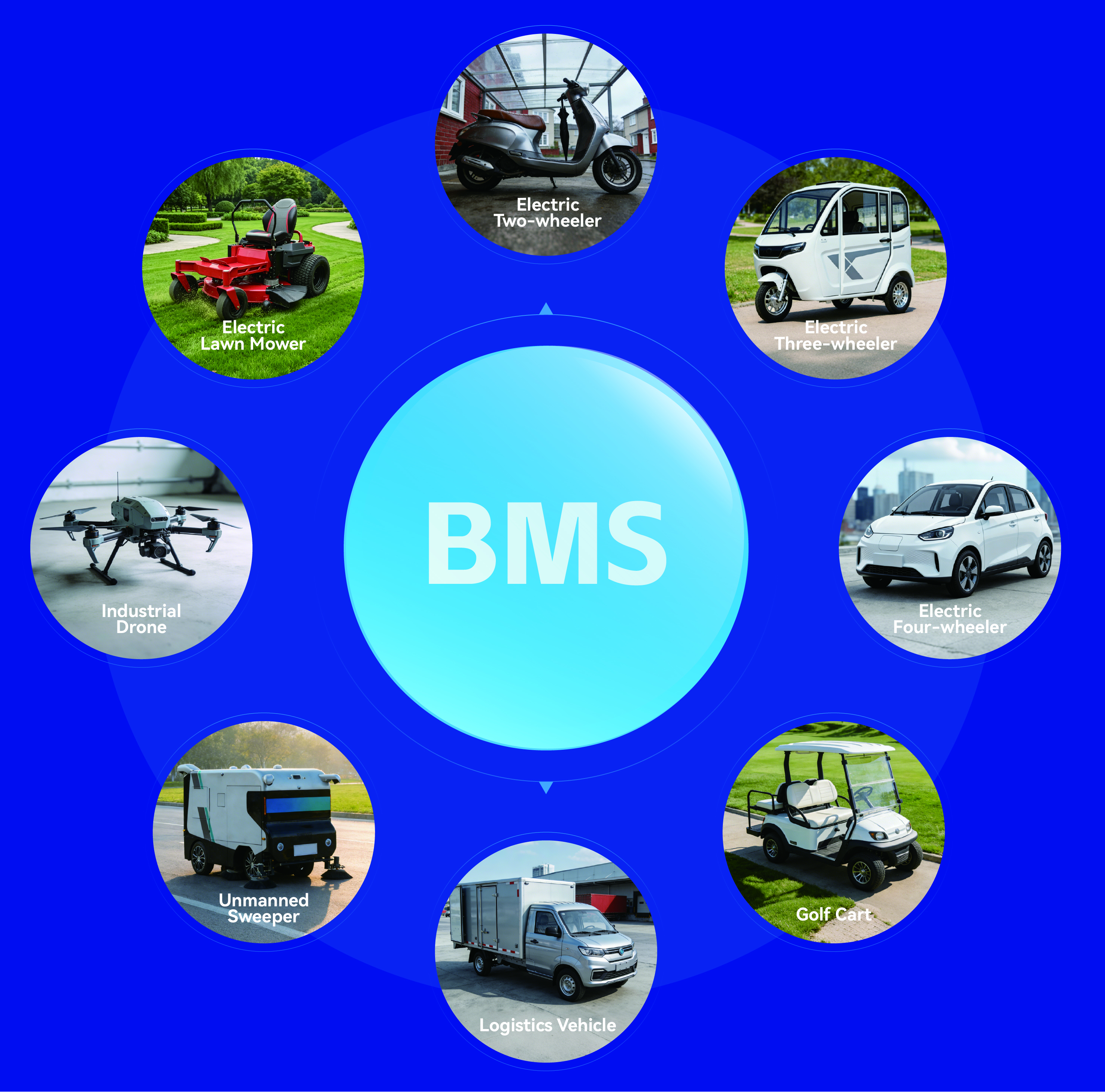
Battery management systems are installed inside traction battery packs used across two-wheeler, three-wheeler, low-speed four-wheeler and light-duty equipment applications.
What the phrase 'BMS' hides inside a request for quotation
A buyer often sends a request for quotation that contains three letters and nothing else. What comes back cannot be compared, because the suppliers are answering different questions.
In light electric vehicles, 'battery management system' covers at least three separate problems:
- Cell protection. Over-charge, over-discharge, over-current, over-temperature and short-circuit protection are the baseline. Nearly every supplier claims them.
- State estimation. SOC, SOH and SOP are the numbers the dashboard and the vehicle controller read. Their accuracy is published on datasheets and it varies by product - for example, a SOC error of 5% against an SOC/SOH/SOP accuracy of 8% at 25 degrees Celsius.
- System integration. CAN, RS485, Bluetooth, TTL and single-wire interfaces determine whether the BMS can talk to the vehicle controller, the charger, a display or a mobile app.
Each of those three problems has its own selection criteria. Collapsing them into one question produces a part that solves a problem you did not ask about.
Why the BMS became a compliance decision, not just a component purchase
Two changes have reshaped how BMS units are sourced for light electric vehicles.
Regulation came first. AIS-156 establishes mandatory safety requirements for lithium-ion battery packs and battery management systems used in L-category vehicles in India - the two-wheeler and three-wheeler segment. The standard has been in force since 1 April 2023. For manufacturers selling into that market, the BMS is no longer something you simply buy and install; it is part of the assembly that has to satisfy a defined safety standard.
Market growth came second. IMARC estimates the India battery management system market at USD 327.9 million in 2025, rising to USD 1,347.6 million by 2034. Growth at that scale attracts suppliers. It also makes the supplier pool harder to screen.
Localisation is happening at the same time. In September 2026, The Economic Times reported that LeSol Group had partnered with Hefei Pengpai Energy Technology Co. Ltd to develop battery management system solutions for electric vehicles in India, with an initial focus on two- and three-wheelers. The same report stated that LeSol is targeting a 10% share of the organised BMS market in India within three years, which it estimates would translate into more than one million units annually.
What this means for a buyer: the BMS category now has more selection criteria than price. Documented compliance, published specifications and verifiable manufacturing capacity have moved to the front of the evaluation.
What a BMS actually does on a light electric vehicle
Monitoring and state estimation
The BMS reads individual cell voltages, total pack voltage, current and temperature. Those readings feed the estimates of state of charge, state of health and state of power.
On published product data, the accuracy is stated numerically. The Pengpai Energy B2107 specifies an SOC estimation error of 5% or less and an SOH estimation accuracy of 8% or less. The DTH2413 specifies an SOC estimation error of 5% or less and an SOH accuracy of 8% or less. The DTH2302 specifies SOC, SOH and SOP estimation accuracy of 8% or less at 25 degrees Celsius.
Those figures have two consequences. They affect what the rider sees on the dashboard, and they affect how the vehicle controller judges remaining energy under load.
Protection
Protection covers over-charge, over-discharge, over-current, over-temperature, over-voltage, under-voltage and short-circuit conditions. Higher-specification units add insulation detection and high-voltage interlock protection - both are listed on the DTH2413 and the B2104.
Protection thresholds are not universal. They are configured around the cell chemistry and the actual load profile of the vehicle, which is why the same BMS model is parameterised differently in different battery packs.
Passive balancing
Cells in series drift apart over time. Passive balancing discharges the highest cells through a small current to pull the string back into line.
The published balancing current differs across the portfolio. Most listed models sit at 50mA - the DTH2302, DTH2421, DTH2410, B2107, DTH2413 and B2104 all specify 50mA, with the PNRG-MA24S60 specifying 50mA or more at 3.3V. The DTH2505 specifies 150mA or more, which suits packs that cycle harder and more often.
Pre-charge, wake-up and relay control
Pre-charge limits the inrush current before the main contactor closes, which protects the controller and the relay. Wake-up method decides when the board powers itself on.
The DTH2410 lists six wake-up paths: charge DET wake-up, discharge DET wake-up, short-circuit wake-up, charger wake-up, communication wake-up and KL15 wake-up. The DTH2505 uses charge wake-up, switch wake-up and communication wake-up. The PNRG-MA24S60 uses Bluetooth wake-up, short-circuit wake-up, charge wake-up and AFE interrupt wake-up. The DTH2413 covers six channels of high-side relay output, rated 1A continuous and 5A instantaneous.
Communication interfaces
The interface decides whether the BMS can talk to anything else on the vehicle. RS485 and CAN are the common automotive buses; Bluetooth is usually reserved for app connection and field diagnostics.
Real configurations vary widely. The B2107 carries CAN x1 and RS485 x1. The DTH2413 carries isolated CAN x2 and RS485 x1. The DTH2410 carries isolated CAN x1, isolated RS485 x2 and Bluetooth x1. The PNRG-MA24S60 provides Bluetooth as standard, with TTL, one-wire or 4G-GPS available as options. The DTH2505 provides Bluetooth as standard with CAN or RS485 optional.
If the vehicle controller runs on a CAN bus, then a CAN bus BMS is a requirement rather than a preference. Specifying a board without it means adding a converter later, or reworking the vehicle harness.
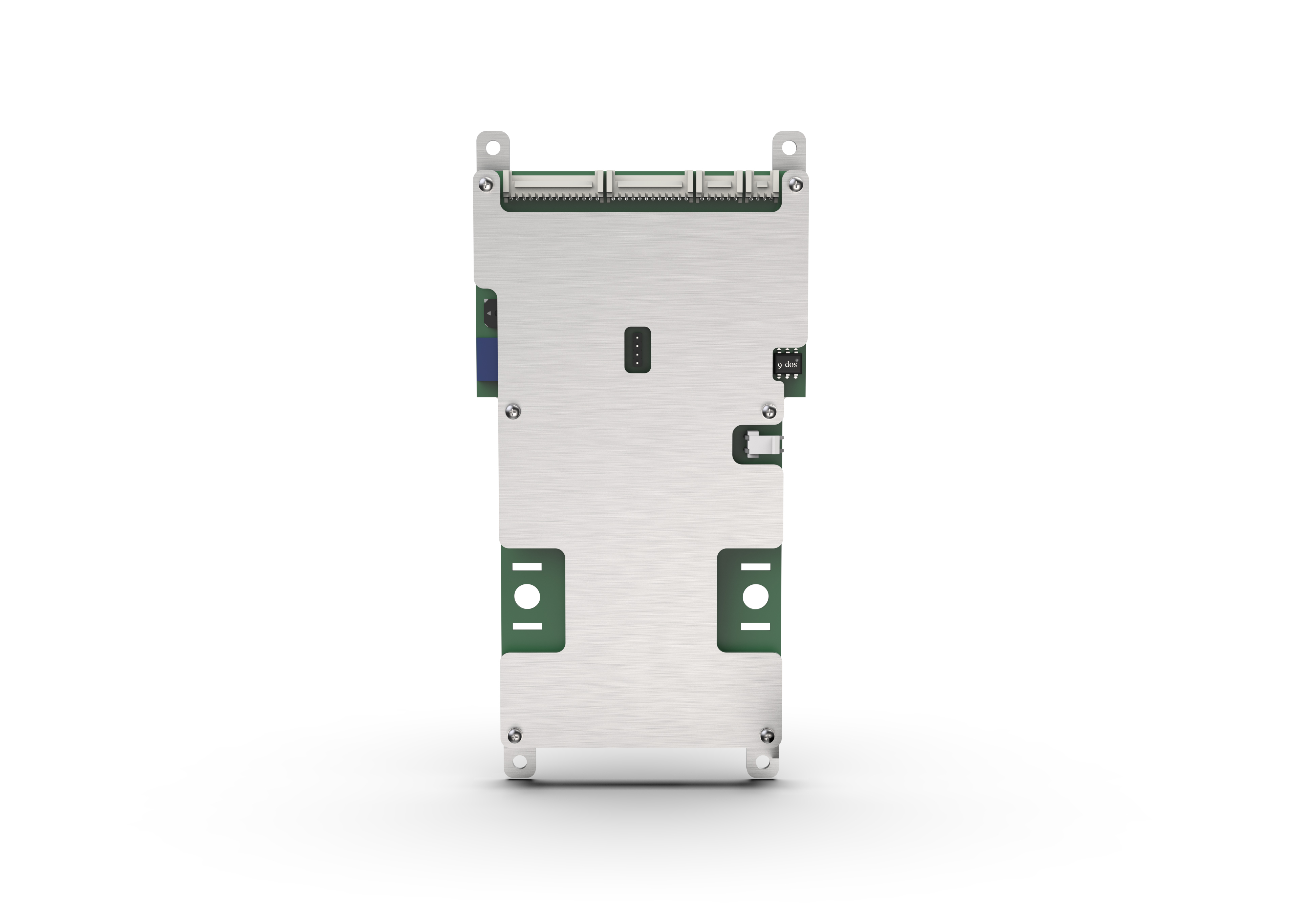
The DTH2505 covers a 15-90V platform and 7S-24S configurations, with selectable 50A-200A continuous current and peak current from 100A to 400A/30s.
How to specify a BMS for a light EV project: seven steps
- Fix the cell chemistry and the series count. NCM, LMO, LCO and LFP behave differently and need different protection thresholds. The series count sets how many channels the BMS must manage - the DTH2302 covers 15S-24S, the PNRG-MA24S60 covers 10S-24S, and the DTH2505 covers 7S-24S.
- Lock the voltage platform and the current curve. Continuous and peak current define the hardware class. The DTH2410 runs a 30-95V platform at 300A continuous and 400A/30s peak. The DTH2421 runs 30-60V with 40A charge, 100A discharge and 210A/1s peak.
- Name the communication protocol. Match the interface the vehicle controller, charger, display and app actually use - CAN, RS485, Bluetooth, TTL or single-wire.
- Choose the wake-up method. Charge wake-up, ACC wake-up, switch wake-up, Bluetooth wake-up or communication wake-up. The wrong choice shows up as current drain when the vehicle is parked.
- Check the installation envelope. Dimensions are not interchangeable. The DTH2421 measures 240mm x 125mm x 15.5mm, the DTH2410 measures 133mm x 255mm x 47mm, and the DTH2302 measures 110mm x 255mm x 47mm. The PNRG-MA24S60 uses a custom dimension to fit different battery-pack structures.
- Confirm the target-market requirement. AIS-156 applies to L-category vehicles in India; other markets impose their own requirements. The compliance path should be agreed before the specification is frozen.
- Agree the customisation scope before signing off the datasheet. Customised PCBA and integrated hardware-software development are confirmed against cell chemistry, series count, current, protocol and operating conditions.
How BMS selection maps to real vehicle categories
Electric two-wheelers and electric motorcycles
Two-wheelers and electric motorcycles show the widest spread in current demand. The DTH2505 covers a 15-90V platform and 7S-24S configurations, with continuous current selectable from 50A to 200A and peak current from 100A to 400A/30s. Its published application industries include food delivery, express and logistics, shared mobility, municipal sanitation, property management, urban management and patrol, factory logistics, battery swap station operation, instant retail and campus commuting.
The PNRG-MA24S60 addresses the same segment from a different angle: 20-95V, 10S-24S, 60A continuous with a 40A option, and Bluetooth as standard - a practical fit where the rider checks pack status from a phone.
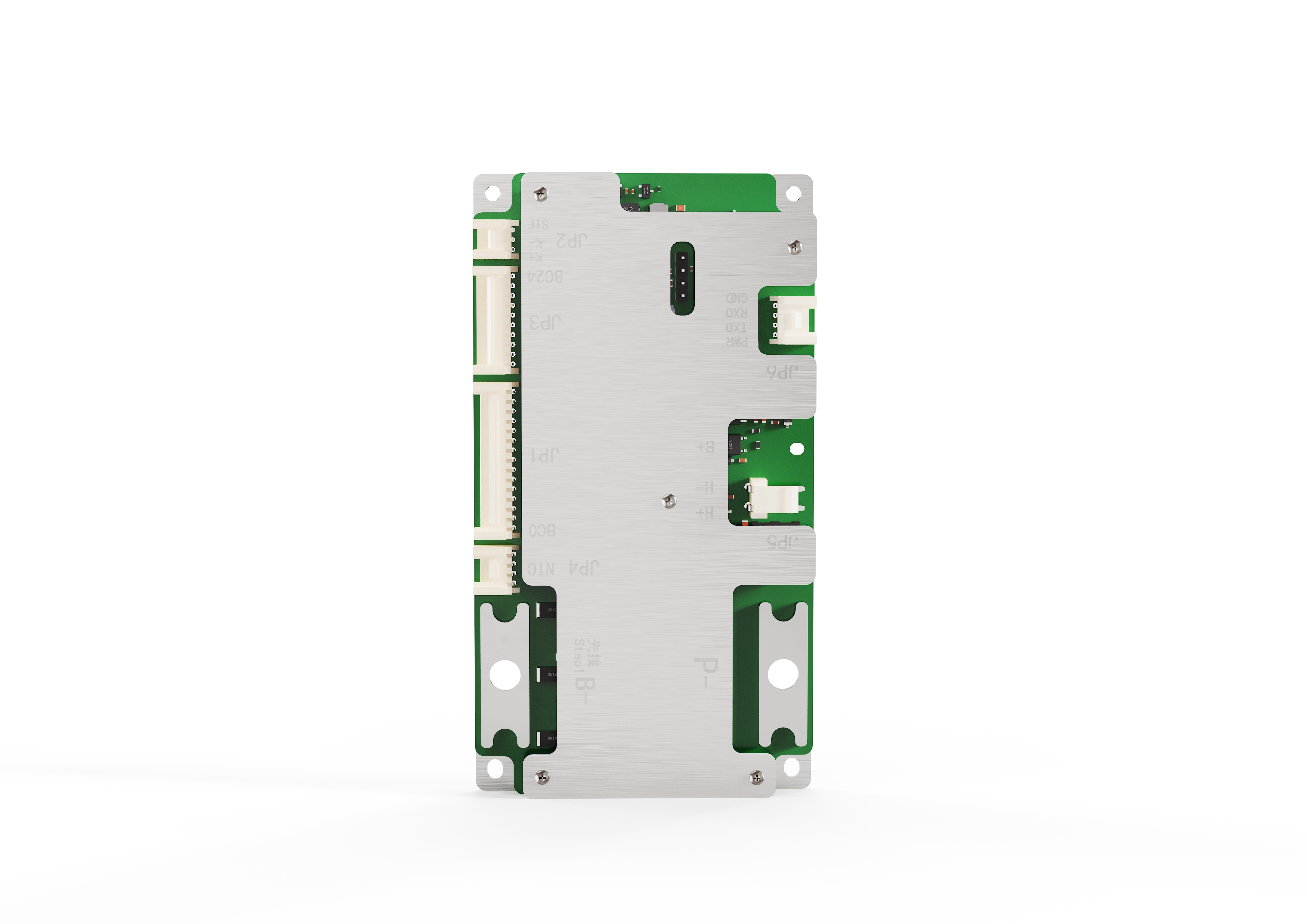
The PNRG-MA24S60 supports a 20-95V platform and 10S-24S cell configurations, with Bluetooth communication as standard.
Electric three-wheelers and India e-rickshaw packs
Three-wheelers combine high continuous load with long daily duty cycles. Both the DTH2505 and the PNRG-MA24S60 list three-wheelers as a target application, and the DTH2505 is explicitly designed for electric three-wheelers and shared mobility battery packs. For India e-rickshaw battery pack projects, the practical specification inputs are the same: series count, voltage platform, continuous and peak current, communication protocol and the applicable safety standard.
Low-speed four-wheelers, sightseeing vehicles and golf carts
The DTH2410 is built for low-speed four-wheelers, sightseeing vehicles and electric golf carts, running 16S-24S on a 30-95V platform at 300A continuous and 400A/30s peak. The DTH2302 covers mini electric vehicles and sightseeing vehicles at 15S-24S with 200A continuous discharge and 400A/30s peak. The DTH2413 adds eight external NTC channels and isolated CAN x2 across low-speed four-wheelers, mini EVs, sightseeing vehicles and energy storage.
Shared mobility, swap stations and fleet operations
Fleet duty cycles punish mismatched BMS selection. The DTH2421 is designed for shared mobility, property management and campus commuting, with 16S configuration, 100A continuous discharge and isolated CAN x2. The DTH2505 lists battery swap station operation and instant retail among its target industries.
Industrial vehicles, AGVs and energy storage
The B2104 scales furthest: a customisable 0-800V platform, 8S-48S with master-slave expansion, and current handling from -500A to 500A, applied in mini sightseeing cars, energy-storage battery packs and low-speed new energy vehicles. Industrial BMS selection for AGVs, factory logistics vehicles and intelligent robot platforms follows the same framework - current profile, communication interface, thermal design and compliance decide the model.
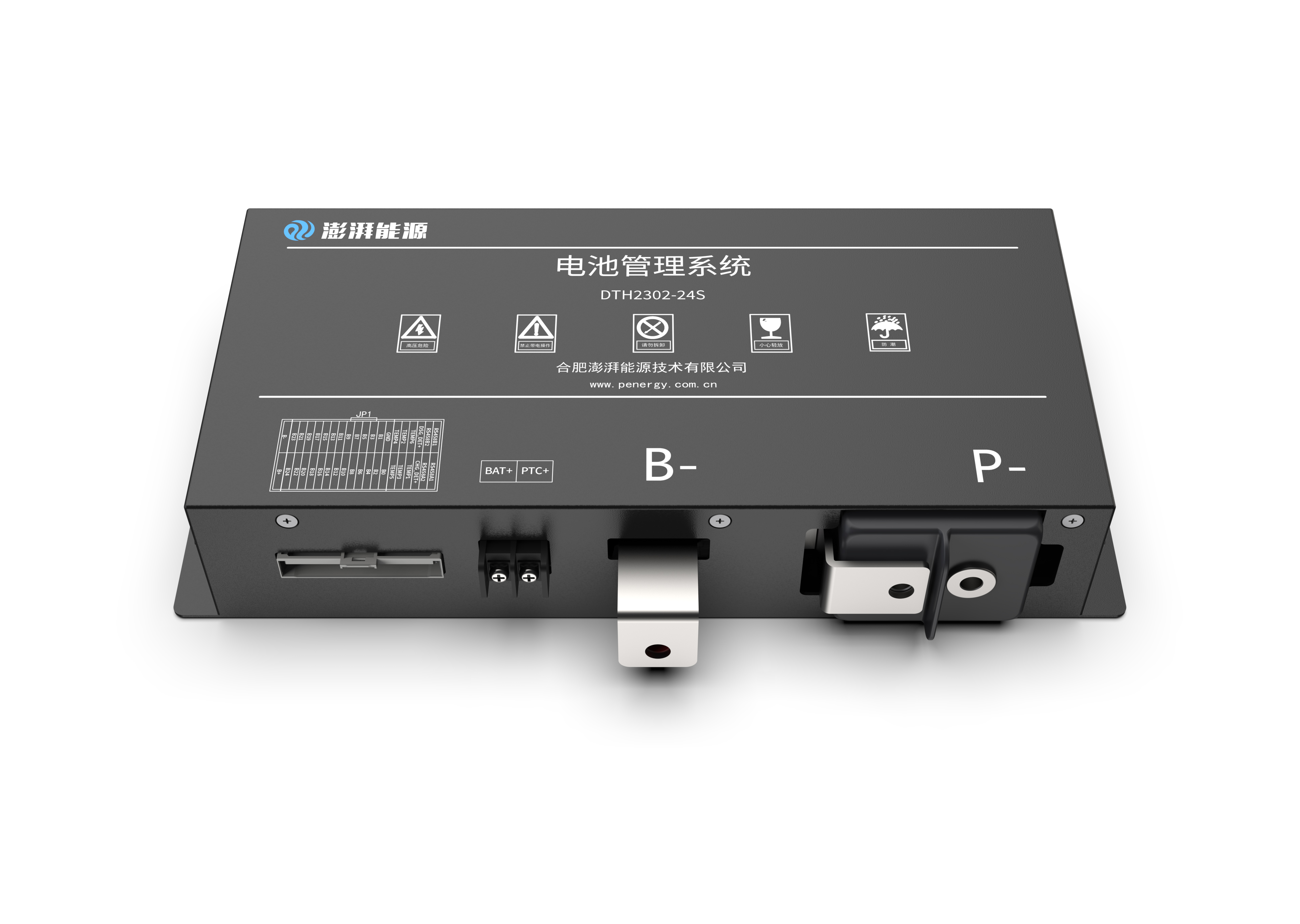
The DTH2302 supports a 30-95V platform and 15S-24S configurations with 200A continuous discharge and 400A/30s peak current.
Light EV BMS series comparison
The table below compares published specifications across the Pengpai Energy BMS portfolio. Values are taken from product datasheets; configurations not listed here are confirmed during selection and customisation.
| Model | Voltage platform | Cell configuration | Continuous current | Communication | Typical vehicles |
|---|---|---|---|---|---|
| DTH2505 | 15-90V | 7S-24S | 50A-200A (optional) | Bluetooth standard; CAN / RS485 optional | Two-wheeler, three-wheeler, low-speed four-wheeler, electric motorcycle, shared mobility packs |
| PNRG-MA24S60 | 20-95V | 10S-24S | 60A (40A optional) | Bluetooth standard; TTL / one-wire / 4G-GPS optional | Two-wheeler, three-wheeler, mini EV, light-duty equipment |
| DTH2421 | 30-60V | 16S | 40A charge / 100A discharge | Isolated CAN x2 | Two-wheeler, mini EV, light-duty EV, shared mobility |
| DTH2302 | 30-95V | 15S-24S | 200A discharge | RS485 x2 | Mini EV, low-speed four-wheeler, sightseeing vehicle |
| DTH2410 | 30-95V | 16S-24S | 300A | Isolated CAN x1, isolated RS485 x2, Bluetooth x1 | Low-speed four-wheeler, sightseeing vehicle, golf cart |
| DTH2413 | 9-36V | 8S-32S | -500A to 500A detection | Isolated CAN x2, RS485 x1 | Low-speed four-wheeler, mini EV, energy storage, sightseeing vehicle |
| B2107 | 0-48-60V | 8S-16S | -200A to 200A detection | CAN x1, RS485 x1 | Mini EV, low-speed EV, energy storage, sightseeing vehicle |
| B2104 | 0-800V (customisable) | 8S-48S (master-slave expandable) | -500A to 500A | CAN x2, RS485 x1 | Sightseeing vehicle, energy-storage pack, low-speed new energy vehicle |
The comparison shows why a single 'BMS' line item is not enough. Voltage platform, cell configuration and communication interface vary independently across the range, and each combination pairs with a different vehicle class.
Frequently asked questions
What does Indian regulation require from a BMS on electric two- and three-wheelers?
AIS-156 establishes mandatory safety requirements for lithium-ion battery packs and battery management systems used in L-category vehicles in India, which covers electric two-wheelers and three-wheelers. It has been in force since 1 April 2023. In practice, the BMS has to be documented as part of a compliant battery pack, and the applicable standard for the target market should be confirmed before mass production rather than after.
How accurate are BMS state-of-charge and state-of-health estimates?
Accuracy is published per product. The Pengpai Energy B2107 specifies an SOC estimation error of 5% or less and an SOH estimation accuracy of 8% or less. The DTH2413 specifies an SOC estimation error of 5% or less and an SOH accuracy of 8% or less. The DTH2302 specifies SOC, SOH and SOP estimation accuracy of 8% or less at 25 degrees Celsius, and can store up to 500 fault records.
Can one BMS design be adapted to a different battery pack or vehicle?
Yes, within the limits of the platform. Published product data states that customised PCBA and integrated hardware-software development are confirmed against cell chemistry, series count, current, protocol and operating conditions. The B2104, for example, offers a customisable 0-800V voltage platform with 8S-48S master-slave expandable configuration, and dimensions are customised according to cell string count (16S, 32S or 48S).
How should a BMS manufacturer be evaluated?
Four checks cover most of the decision. First, whether the published portfolio actually covers your vehicle class and current range. Second, whether manufacturing and test evidence exists - Pengpai Energy operates a 2,500 square metre facility with annual capacity of 800,000 units, holds dozens of authorised patents and software copyrights covering battery management systems, and runs an R&D laboratory equipped for reliability, temperature, shock and safety testing. Third, whether market coverage and delivery match your programme - Pengpai Energy serves China, India, Southeast Asia, North America and Europe, with export accounting for 60% of sales. Fourth, whether a physical sample has been validated on your pack, not just on a brochure.
What should be confirmed before placing a BMS order?
Confirm cell chemistry, series count, voltage platform, continuous and peak current, communication protocol, wake-up method, installation space and the requirements of the destination market. Those eight inputs are what a supplier needs to recommend a model instead of guessing one. To start that conversation, contact Pengpai Energy at kaiquan.zheng@penergy.com.cn, by WhatsApp on +86 133-3551-2050, or by phone on +86-0551-62628315.
About Pengpai Energy
Hefei Pengpai Energy Technology Co., Ltd. (Pengpai Energy) was established in 2017 and is a national high-tech enterprise specialising in the research, development, manufacturing, sales and service of new energy battery management systems and intelligent energy management platforms.
The company operates a 2,500 square metre manufacturing facility with approximately 100 employees, of whom R&D engineers account for more than 60%, and an annual production capacity of 800,000 units. Its products are used in two-, three- and four-wheeled vehicles, commercial vehicles, intelligent robots and drones. Major markets include China, India, Southeast Asia, North America and Europe, with marketing branches established in Southeast Asia, India, North America and Europe, and exports accounting for 60% of total sales.
Pengpai Energy owns a full set of independent intellectual property rights for battery management systems, including dozens of authorised invention patents, utility model patents and software copyrights. The company has passed ISO9001 quality management system certification, and its BMS products comply with CE and FCC international standards. Its R&D laboratory is equipped with professional test equipment for reliability, temperature, shock and safety testing.
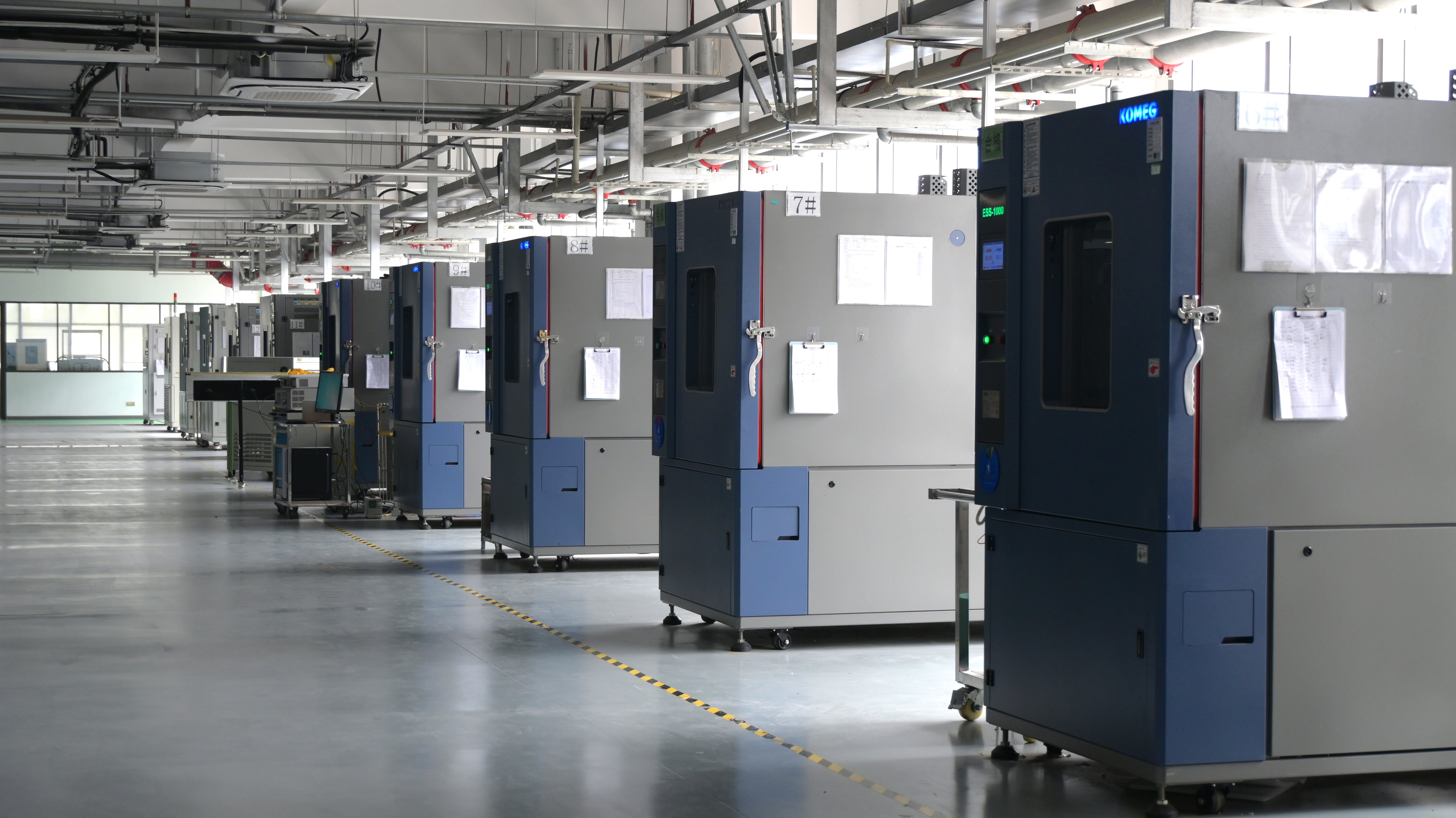
Pengpai Energy manufactures battery management systems across a 2,500 square metre facility with an annual capacity of 800,000 units.
Specify the right BMS for your battery pack
Send your cell chemistry, series count, voltage platform, continuous and peak current, communication protocol and installation space. We match a model to those inputs rather than to a guess.
Email: kaiquan.zheng@penergy.com.cn
WhatsApp: +86 133-3551-2050
Tel: +86-0551-62628315
Website: www.penergy.com.cn
Download the full product catalog: Pengpai Energy BMS Catalog (PDF)
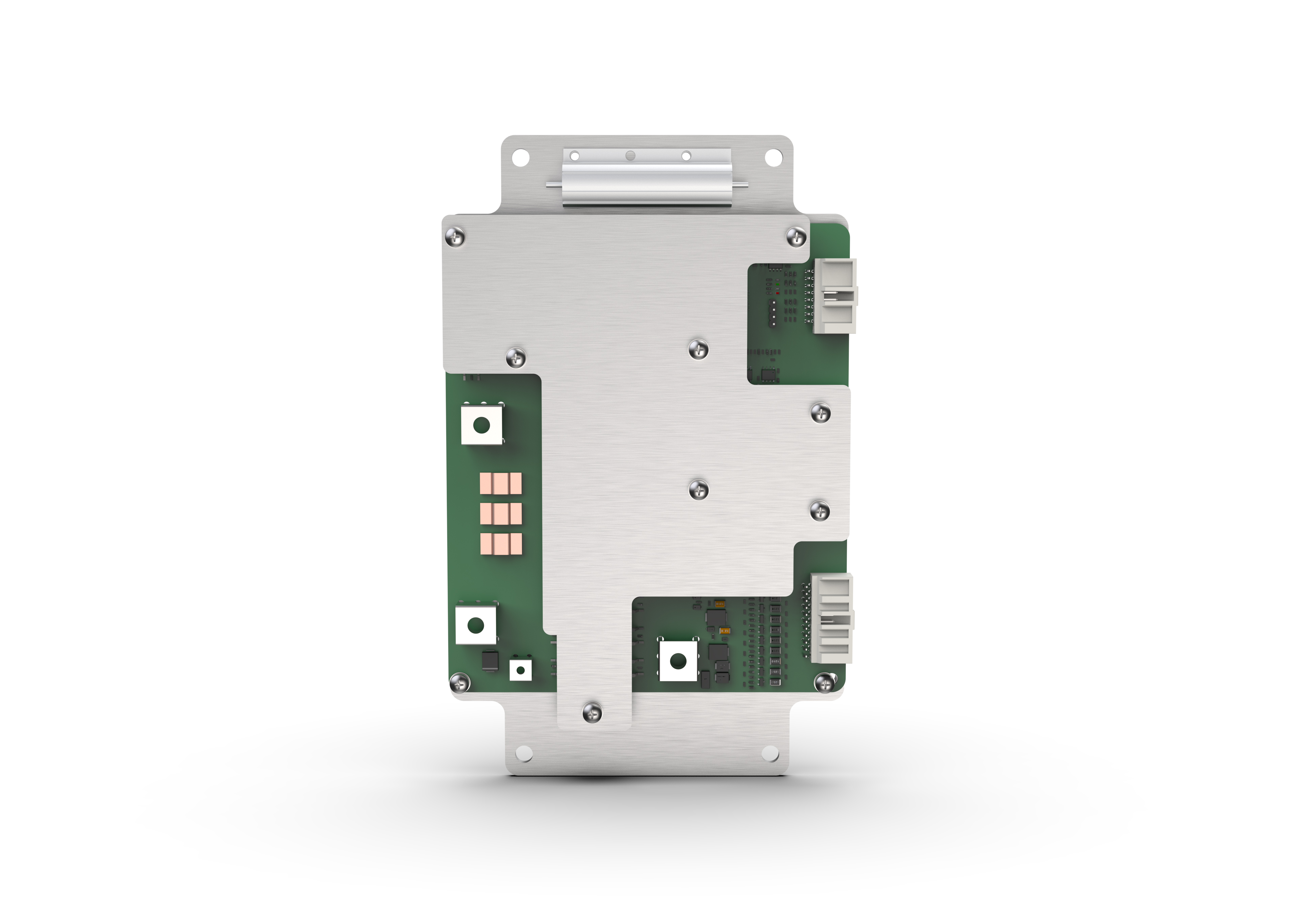
The B2107 combines CAN x1 and RS485 x1 interfaces with an SOC estimation error of 5% or less and an SOH accuracy of 8% or less.
Conclusion
A battery management system is not a commodity line item. In light electric vehicles it decides whether the pack stays inside its safe operating limits, what the rider sees on the dashboard, and whether the vehicle can be sold into a regulated market such as India under AIS-156.
The fastest way to reduce risk is to stop asking for a BMS and start specifying one: cell chemistry, series count, voltage platform, current profile, communication protocol, wake-up method, installation space and target-market compliance. Once those eight inputs are fixed, the portfolio comparison above narrows quickly, and a sample can be validated against the actual pack rather than against a specification sheet.
Have Questions or Need More Details?
Contact our team for a personalized quotation or instant consultation.
Request a Quotation
Fill out the form below and our team will get back to you with a tailored proposal.
WhatsApp Direct Chat
Prefer to chat in real-time? Message us on WhatsApp for instant assistance & quick answers.
- Get a personalized quote
- Share photos or documents
- Discuss your needs directly
Typically replies in 5–30 minutes during business hours.