
DTH2410 vs PNRG-MA24S60 vs B2104: Which BMS Fits Your Light EV Platform?
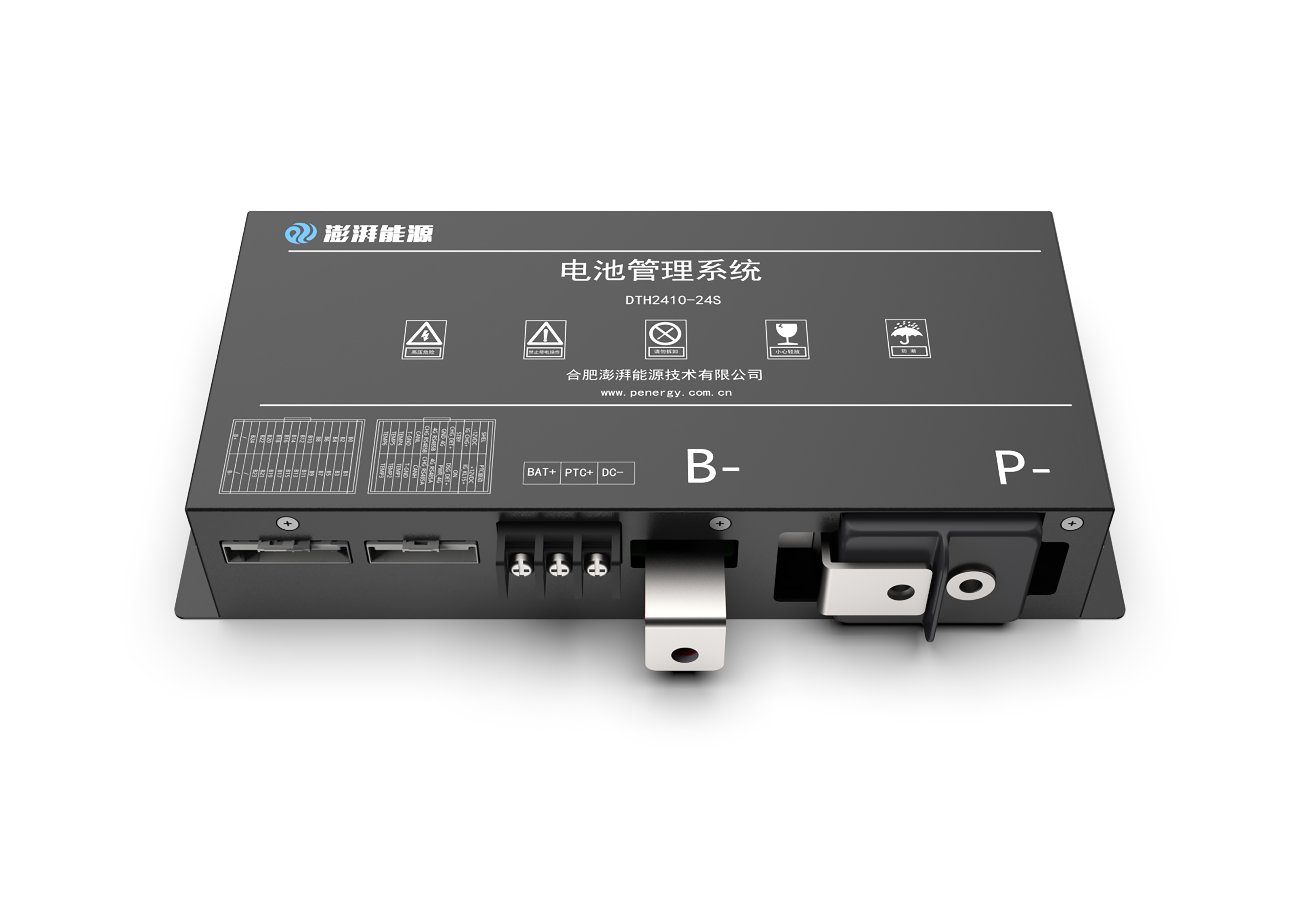
The DTH2410 is one of three Pengpai Energy BMS platforms evaluated in this selection guide, alongside the PNRG-MA24S60 and the B2104.
The short answer: DTH2410 is built for high-current low-speed four-wheeler platforms (30–95 V, 16S–24S, 300 A continuous). PNRG-MA24S60 is built for compact two- and three-wheeler and light-duty equipment platforms (20–95 V, 10S–24S, 60 A continuous, with a 40 A version optional). B2104 is built for high-voltage energy storage and mini EV packs (0–800 V customizable, 8S–48S master-slave expandable, −500 A to 500 A). Choosing between them comes down to four specification variables — voltage platform, cell configuration, continuous current, and communication interface.
This guide compares all three models on those four dimensions, then walks through a step-by-step matching process, the vehicle classes each model serves, and the certification evidence behind them. It is written for importers, OEM buyers, battery-pack integrators, and procurement engineers sourcing a Battery Management System for light electric vehicle programmes in India, Southeast Asia, North America, and Europe.
Why BMS selection fails before the quotation stage
Most light EV BMS problems are not manufacturing problems. They are specification problems that appear later as overheating, communication errors, premature balancing drift, or homologation delays.
Three failure patterns repeat across projects:
1. The current class is wrong. A BMS rated for a 60 A continuous two-wheeler pack will not carry the duty cycle of a 300 A low-speed four-wheeler with a heavier vehicle mass and higher start-stop torque demand. The continuous working current — not the peak current — is what determines whether the board survives daily operation.
2. The series count is mismatched with the pack. A 16S–24S platform cannot manage a 10S pack, and an 8S–48S platform is over-specified for a small two-wheeler battery. Series count drives balancing channel design, connector layout, and physical dimensions.
3. The communication bus does not match the vehicle controller. If the vehicle ECU expects CAN and the BMS ships with Bluetooth as its standard interface, the project either needs an interface option or a different model. This is one of the most common causes of late-stage redesign.
The practical lesson is that BMS selection should be treated as a requirements-matching exercise, not a product-catalogue exercise. The three models below are a useful case study because they look similar in a specification list but map to very different vehicles.
Industry background: regulation and demand in light EV BMS
Two structural forces shape BMS procurement for light electric vehicles in 2026: regional safety regulation and rapid market expansion.
In India, AIS-156 establishes mandatory safety requirements for lithium-ion battery packs and battery management systems used in electric two-wheelers and three-wheelers (L-category vehicles), effective from 1 April 2023. For fleet buyers and OEMs, this means the BMS is no longer an internal component choice — it sits inside a regulated safety envelope covering pack protection, thermal behaviour, and cell-level monitoring. Sourcing decisions made purely on unit cost can create homologation risk later.
On the demand side, IMARC Group estimates the India battery management system market was valued at USD 327.9 million in 2025 and is expected to reach USD 1,347.6 million by 2034. That growth is being translated into supplier activity: in September 2026, The Economic Times reported that LeSol Group partnered with China-based Hefei Pengpai Energy Technology Co. Ltd to develop localized battery management system solutions for electric vehicles in India, with an initial focus on two- and three-wheelers. The same report stated that LeSol is targeting a 10% share of the organized BMS market in India within three years, which it estimates would translate into more than one million units annually.
For buyers, the implication is straightforward: the BMS supply chain for light EVs is consolidating around suppliers who can combine volume manufacturing with model-level specification coverage. That makes the ability to distinguish between BMS models on measurable parameters more commercially important, not less.
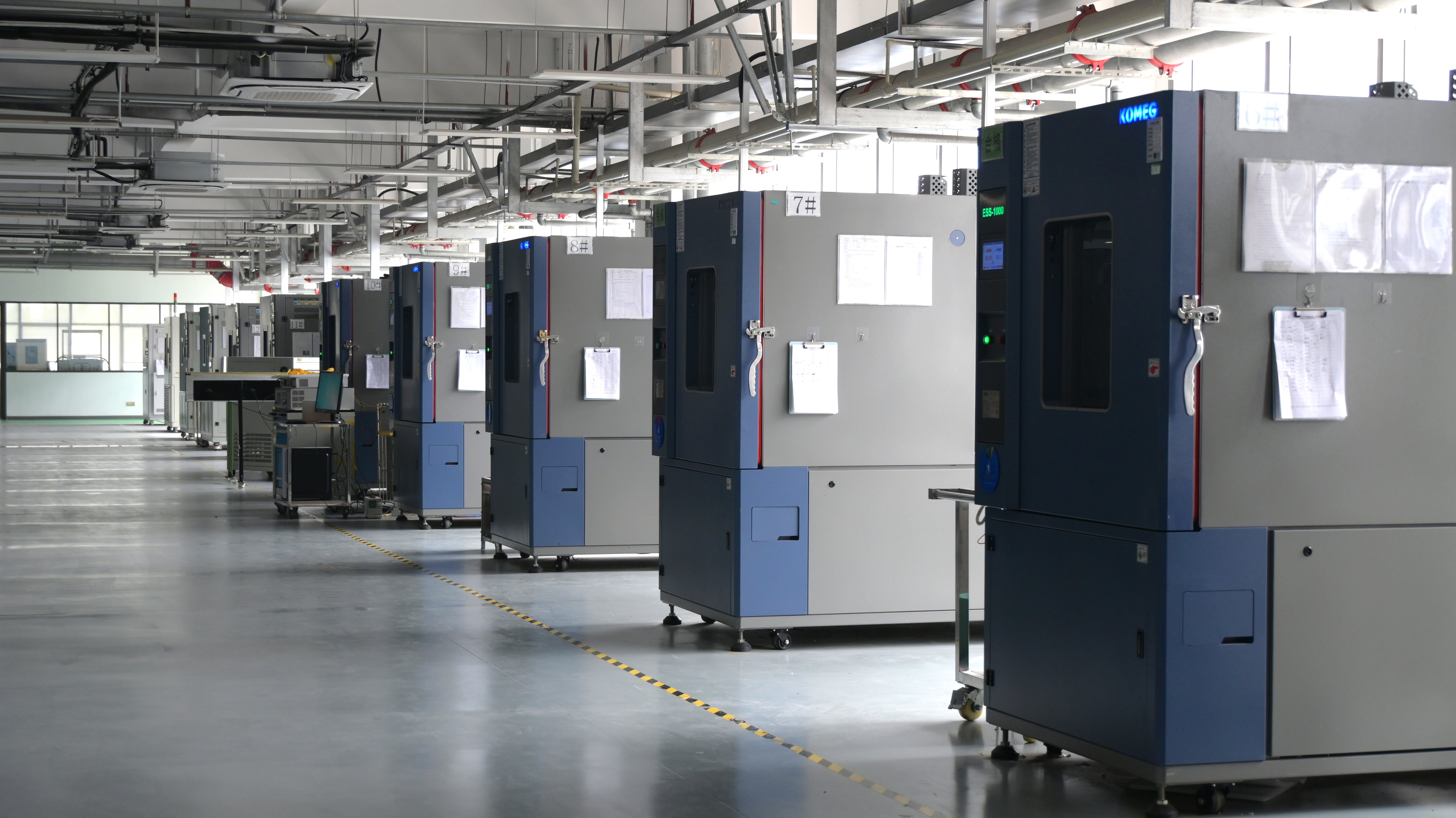
Pengpai Energy, established in 2017, operates a 2,500㎡ BMS manufacturing facility with a stated monthly capacity of 660,000 units.
Three Pengpai Energy BMS platforms, three vehicle classes
Pengpai Energy (Hefei Pengpai Energy Technology Co., Ltd.) is a BMS manufacturer established in 2017 in Hefei, Anhui, China, specialising in the research, development, manufacturing, and service of new energy battery management systems and intelligent energy management platforms. Its publicly listed models include the B2107, DTH2411, DTH2302, DTH2410, and B2003 series, serving electric two-wheelers, three-wheelers, low-speed four-wheelers, and other light-power applications.
DTH2410 — the high-current platform for low-speed four-wheelers
The DTH2410 supports a rated voltage platform of 30–95 V and a cell configuration of 16S–24S. Its continuous working current is 300 A, with a peak current of 400 A for 30 seconds. It is compatible with NCM, LMO, LCO, and LFP battery chemistries.
For integration, the DTH2410 provides one isolated CAN channel, two isolated RS485 channels, and one Bluetooth channel — a full three-path communication set rather than a single bus. It includes 6-channel NTC temperature sensing and operates from −30 °C to 85 °C. Protection functions cover over-charge, over-discharge, over-current, over-temperature, under-voltage, and short-circuit protection, with pre-charge support.
Mechanically, the unit measures 133 mm × 255 mm × 47 mm, uses an aluminium alloy housing, an FR-4 high-TG flame retardant PCB substrate, and a copper-alloy gold-plated connector. Passive balancing current is ≥50 mA at 25 °C. Wake-up methods include charge DET wake-up, discharge DET wake-up, short-circuit wake-up, charger wake-up, communication wake-up, and KL15 wake-up.
Typical application scenarios for the DTH2410 are mini electric sightseeing vehicles, low-speed electric vehicles, and electric golf carts. It also fits cultural tourism, smart scenic area, hotel and resort, theme park, golf course operation, healthcare and pension, large-scale industrial park, and community micro-mobility industries.
PNRG-MA24S60 — the compact platform for two- and three-wheelers
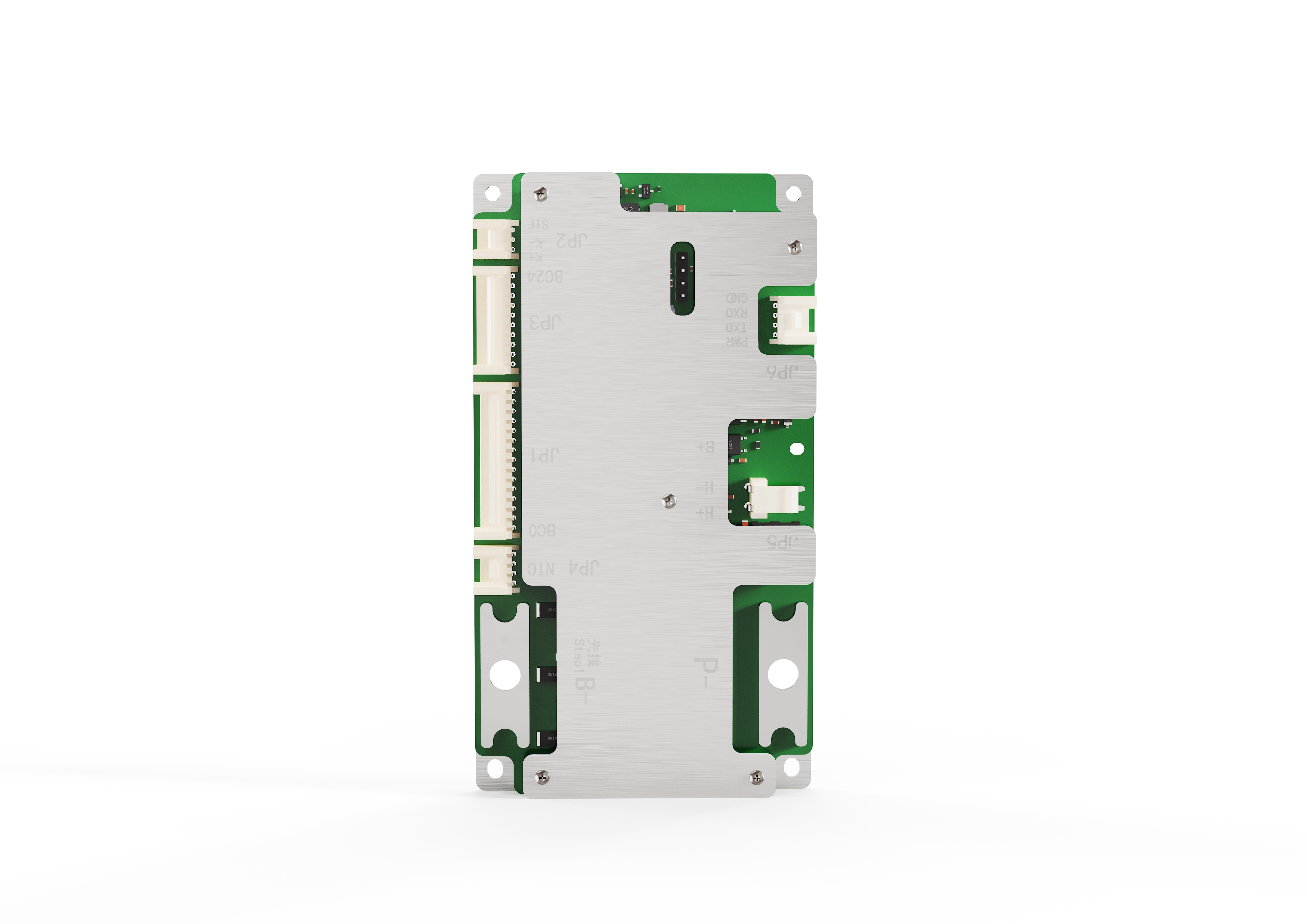
The PNRG-MA24S60 uses an ABS plastic housing and a copper-alloy gold-plated connector, with Bluetooth as the standard communication interface.
The PNRG-MA24S60 supports a 20–95 V voltage platform and 10S–24S cell configurations. Its continuous working current is 60 A, with a 40 A continuous working current version optional; peak current is 120 A for 30 seconds, and the 40 A version has a peak current of 80 A for 30 seconds. Supported chemistries are NCM, LMO, LCO, and LFP.
Communication is where this model differs most clearly from the other two. The standard interface is Bluetooth, with TTL, One-wire, and 4G-GPS available as options. The provided specification does not list CAN. It has 2 built-in and 2 external NTC temperature sensing channels and operates from −30 °C to 85 °C. Protection functions cover over-charge, over-discharge, over-current, over-temperature, and short-circuit protection, with pre-charge supported. Passive balancing current is ≥50 mA at 3.3 V.
Wake-up methods include Bluetooth wake-up, short-circuit wake-up, charge wake-up, and AFE interrupt wake-up. The board uses an FR-4 high-TG flame retardant substrate, a copper-alloy gold-plated connector, and a high-power silicon power transistor, with an ABS plastic housing and a custom dimension to fit different battery-pack structures.
Application industries for the PNRG-MA24S60 include food delivery, express and logistics, shared mobility, municipal sanitation, property management, light-duty equipment, and mini electric vehicles — the patterns where a two- or three-wheeler is charged, swapped, and returned to service repeatedly through the day.
B2104 — the high-voltage platform for energy storage and mini EVs
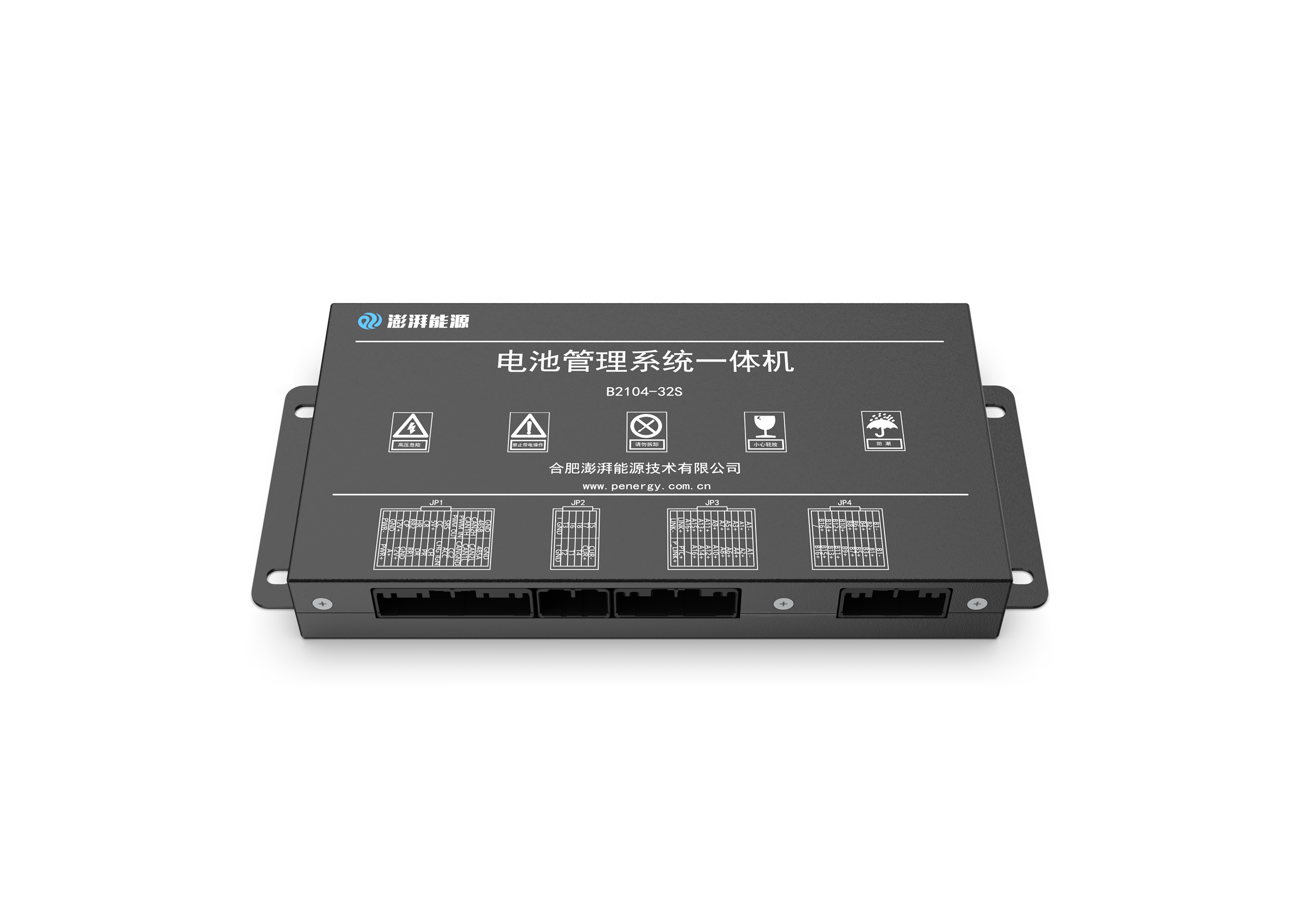
The B2104 supports a customizable 0–800 V platform with master-slave expansion across 8S–48S configurations.
The B2104 supports a voltage platform of 0–800 V (customizable) and cell configurations from 8S to 48S with master-slave expandability. Its continuous working current range is −500 A to 500 A, and it supports NCM, LMO, LCO, and LFP chemistries. It has 8-channel external NTC temperature sensing and operates from −30 °C to 85 °C.
Communication interfaces are CAN ×2 and RS485 ×1. Protection functions are broader than the other two models and include over-charge, over-discharge, over-current, over-temperature, insulation detection, and high-voltage interlock protection, with pre-charge supported. Wake-up methods include ACC wake-up, A+ wake-up, and CHG_IGN wake-up. Passive balancing current is 50 mA.
The B2104 is built differently at the component level: an aluminium alloy metal housing, an FR-4 high-TG flame retardant substrate, an automotive-grade multi-pin copper-alloy connector, and a high-current electromagnetic relay. Dimensions are customized according to cell string count (16S / 32S / 48S).
Typical applications are mini electric sightseeing cars, energy-storage battery packs, and low-speed new-energy vehicles, spanning cultural tourism, smart scenic area, hotel and resort, energy storage system integration, industrial park, large-scale energy storage, microgrid, and community micro-mobility industries. Selected models can connect with APP, PC, IoT platforms, or displays to support vehicle monitoring and software expansion.
Step-by-step: matching a BMS model to a light EV project
The following sequence reflects the order in which specification decisions should be locked. Each step narrows the model choice before cost and commercial terms are discussed.
Step 1 — Fix the voltage platform
The pack's nominal voltage range decides the platform family. A 48 V or 60 V two-wheeler pack sits inside the PNRG-MA24S60's 20–95 V window. A 72 V or 96 V low-speed four-wheeler pack sits inside the DTH2410's 30–95 V window. A high-voltage storage pack or a large mini EV pack moves into the B2104's customizable 0–800 V range.
Where buyers make mistakes: assuming two models with overlapping voltage windows are interchangeable. The DTH2410 and PNRG-MA24S60 both cover part of the 30–95 V range, but they differ by an order of magnitude in continuous current.
Step 2 — Fix the series count
Series count determines balancing channel design and physical layout:
- PNRG-MA24S60: 10S–24S
- DTH2410: 16S–24S
- B2104: 8S–48S, master-slave expandable
A 16S pack is inside all three ranges, but a 10S pack is only inside the PNRG-MA24S60 and B2104 ranges, and a 32S or 48S pack is only inside the B2104 range. Buyers planning to scale a platform across pack sizes should note that the B2104's master-slave architecture allows expansion without replacing the BMS architecture.
Step 3 — Fix the continuous current
Continuous working current is the single most important selection parameter for drivetrain BMS. The three models sit in three distinct current classes:
- PNRG-MA24S60: 60 A continuous (40 A optional), 120 A peak for 30 s
- DTH2410: 300 A continuous, 400 A peak for 30 s
- B2104: −500 A to 500 A continuous working current range
Match the current class to the duty cycle, not to a single peak event. A heavier four-wheeler with hill-start demand needs headroom above its steady-state draw; a shared two-wheeler with regular battery swapping does not.
Step 4 — Choose the communication interface
This is frequently the deciding step for OEM integration:
- DTH2410: isolated CAN ×1, isolated RS485 ×2, Bluetooth ×1
- PNRG-MA24S60: Bluetooth standard; TTL, One-wire, or 4G-GPS optional
- B2104: CAN ×2, RS485 ×1
If the vehicle controller expects a CAN bus, the DTH2410 or B2104 is the natural starting point. If the requirement is a lighter telemetry or swap-station link, the PNRG-MA24S60's Bluetooth standard, with optional 4G-GPS, may be the better fit. Buyers should confirm the protocol against their controller logic before ordering, not after.
Step 5 — Confirm protection scope and certification
Protection scope differs by model. The DTH2410 covers over-charge, over-discharge, over-current, over-temperature, under-voltage, and short-circuit protection. The PNRG-MA24S60 covers over-charge, over-discharge, over-current, over-temperature, and short-circuit protection. The B2104 adds insulation detection and high-voltage interlock protection — the two functions that matter most once a pack crosses into high-voltage territory.
On the quality side, Pengpai Energy's BMS product is certified to IATF 16949:2016. The certificate number is IATF00055 and it is issued by ABS Quality Evaluations, Inc. (USA). The certification covers the design and manufacturing of Battery Management System (BMS) and applies to the global automotive and new energy vehicle supply chain market, including North America, Europe, and Southeast Asia.
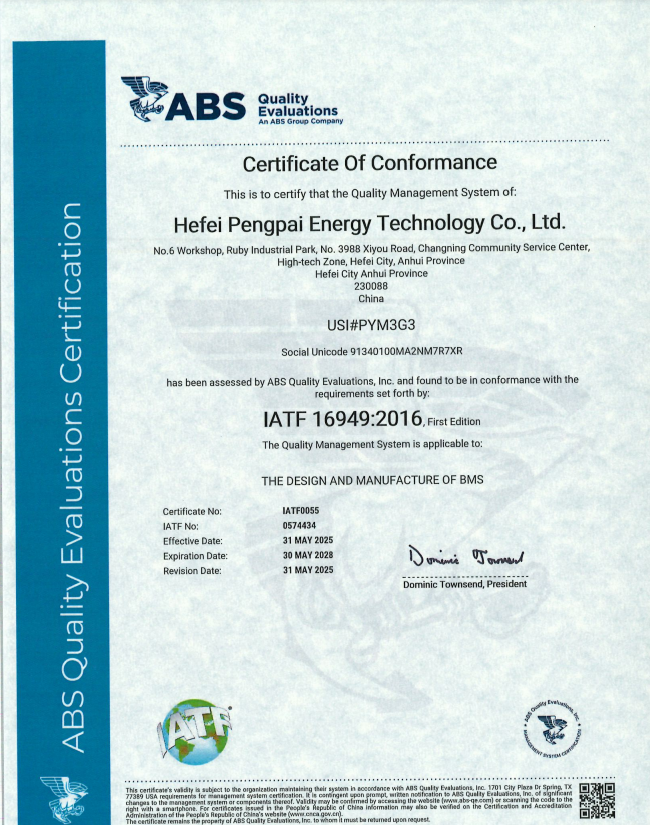
IATF 16949:2016 certificate IATF00055, issued by ABS Quality Evaluations, Inc. (USA), covering BMS design and manufacturing.
Use cases: which model for which vehicle class
Electric two-wheelers and electric motorcycles. The PNRG-MA24S60 fits 20–95 V, 10S–24S packs at 60 A continuous, with Bluetooth as the standard interface and a custom dimension to suit compact battery-pack envelopes. Its application industries include food delivery, express and logistics, shared mobility, and municipal sanitation — segments defined by daily charge-and-return cycles.
Electric three-wheelers and e-rickshaws. The same 10S–24S, 20–95 V envelope applies to many three-wheeler packs, where the deciding factors are continuous current headroom and protection scope rather than high-voltage isolation. The PNRG-MA24S60's 40 A optional version is relevant where the pack design is current-limited by cell choice.
Low-speed four-wheelers, sightseeing vehicles, and golf carts. These are the DTH2410's stated application scenarios. At 30–95 V, 16S–24S, and 300 A continuous with 400 A peak for 30 s, this model targets vehicles with higher mass and higher startup torque demand than a two-wheeler. The three-path communication set (CAN, dual RS485, Bluetooth) supports both vehicle bus integration and external monitoring.
Energy storage packs and mini EVs. The B2104's 0–800 V customizable platform, 8S–48S master-slave expandable architecture, and −500 A to 500 A current range place it in the energy storage integration, large-scale energy storage, and microgrid industries, as well as large mini EV and sightseeing car packs. Insulation detection and high-voltage interlock protection are the functions that justify the aluminium alloy housing and automotive-grade connector design.
Industrial and AGV-adjacent vehicles. BMS for industrial and light-duty equipment applications generally sit in the same low-voltage, moderate-current band as the PNRG-MA24S60, where the standard interface is Bluetooth and CAN or RS485 can be added through customization. Buyers in these segments should confirm operating conditions and interface requirements with the supplier before assuming a catalogue match.
Specification comparison table
| Parameter | DTH2410 | PNRG-MA24S60 | B2104 |
|---|---|---|---|
| Voltage platform | 30–95 V | 20–95 V | 0–800 V (customizable) |
| Cell configuration | 16S–24S | 10S–24S | 8S–48S (master-slave expandable) |
| Continuous working current | 300 A | 60 A (40 A optional) | −500 A to 500 A |
| Peak current | 400 A / 30 s | 120 A / 30 s (80 A / 30 s on 40 A version) | Not stated in the provided specification |
| Battery chemistries | NCM, LMO, LCO, LFP | NCM, LMO, LCO, LFP | NCM, LMO, LCO, LFP |
| Temperature sensing | 6-channel NTC | 2 built-in + 2 external NTC | 8-channel external NTC |
| Operating temperature | −30 °C to 85 °C | −30 °C to 85 °C | −30 °C to 85 °C |
| Communication interface | Isolated CAN ×1, isolated RS485 ×2, Bluetooth ×1 | Bluetooth standard; TTL / One-wire / 4G-GPS optional | CAN ×2, RS485 ×1 |
| Protection functions | Over-charge, over-discharge, over-current, over-temperature, under-voltage, short-circuit | Over-charge, over-discharge, over-current, over-temperature, short-circuit | Over-charge, over-discharge, over-current, over-temperature, insulation detection, high-voltage interlock protection |
| Pre-charge function | Supported | Supported | Supported |
| Passive balancing current | ≥50 mA @ 25 °C | ≥50 mA @ 3.3 V | 50 mA |
| Enclosure / PCB | Aluminium alloy housing; FR-4 high-TG substrate | ABS plastic housing; FR-4 high-TG substrate | Aluminium alloy metal housing; FR-4 high-TG substrate |
| Typical vehicle class | Low-speed four-wheelers, sightseeing vehicles, golf carts | Two- and three-wheelers, mini EVs, light-duty equipment | Energy storage packs, mini EVs, low-speed new-energy vehicles |
All values in this table are taken from Pengpai Energy's published model specifications for the DTH2410, PNRG-MA24S60, and B2104. Where a parameter is not published for a model, the table states so rather than estimating.
Manufacturing and supply context behind the model choice
Model selection only becomes a procurement decision when supply capability is attached to it. The relevant public facts about Pengpai Energy are:
- Established in 2017; more than 100 employees, with R&D engineers accounting for more than 60% of the workforce. The R&D team includes 6 PhD holders and 16 master's degree holders, with core personnel holding more than 10 years of experience.
- A stated annual output of 800,000 units and a monthly production capacity of 660,000 units.
- Over 460 cumulative test items conducted across the product programme.
- A minimum order quantity of 1 unit and a lead time of 0–30 days.
- Exports accounting for 60% of business, with markets including China, India, Southeast Asia, North America, and Europe.
- An Indian market customer relationship covering more than 800,000 units delivered across four consecutive years of partnership.
The customization scope is also defined publicly: voltage platform, battery series count, continuous and peak current, cell chemistry, temperature sensing, communication interfaces, wake-up methods, pre-charge and control circuits, APP / PC / IoT and display extensions, and mechanical dimensions and connectors can all be confirmed project by project. Selected models can also connect with APP, PC, IoT platforms, or displays to support vehicle monitoring and software expansion.
For buyers comparing models, this matters because it defines where catalogue selection ends and engineering begins. A project that fits an existing model's published envelope — for example, a 72 V, 20S, 150 A low-speed four-wheeler pack matching the DTH2410 platform — can move quickly. A project that falls between envelopes should start from a customization discussion rather than a forced catalogue match.
Frequently asked questions
Is Pengpai Energy's BMS certified to IATF 16949:2016, and how does that relate to Indian EV battery rules?
Pengpai Energy's Battery Management System product is certified to IATF 16949:2016 under certificate number IATF00055, issued by ABS Quality Evaluations, Inc. (USA). The certification covers the design and manufacturing of Battery Management System (BMS) and applies to the global automotive and new energy vehicle supply chain market, including North America, Europe, and Southeast Asia. Separately, India's AIS-156 establishes mandatory safety requirements for lithium-ion battery packs and battery management systems in L-category vehicles (two- and three-wheelers), effective from 1 April 2023. For Indian projects, buyers should confirm that the selected BMS model satisfies the cell monitoring, protection, and communication requirements their vehicle homologation depends on.
Which of these BMS models support CAN bus, and how do the communication interfaces differ?
Among the three models compared here, the DTH2410 and the B2104 provide CAN interfaces as part of their standard communication set. The DTH2410 offers isolated CAN ×1, isolated RS485 ×2, and Bluetooth ×1. The B2104 offers CAN ×2 and RS485 ×1. The PNRG-MA24S60 uses Bluetooth as its standard interface, with TTL, One-wire, or 4G-GPS available as options; the provided specification does not list CAN. Buyers who require CAN bus integration should therefore start from the DTH2410 or B2104, or confirm a customized PCBA configuration with the supplier.
What drives the customization scope of a light EV BMS project?
Pengpai Energy states that customized PCBA and integrated hardware-software development can be confirmed against cell chemistry, series count, current, protocol, and operating conditions. The specification variables that define the scope of work are the voltage platform, battery series count, continuous and peak current, temperature sensing, communication interfaces, wake-up methods, pre-charge and control circuits, APP / PC / IoT and display extensions, and mechanical dimensions and connectors. A project that stays inside an existing model's published envelope requires less development than one that does not, so these variables should be locked before commercial terms are requested.
Can buyers validate a BMS model before committing to volume production?
Yes. Pengpai Energy lists a minimum order quantity of 1 unit, which allows a single-unit sample and bench validation before any volume commitment, with a stated lead time of 0–30 days. Sample validation is the stage where buyers should confirm the real charge and discharge current profile, the actual communication protocol used by the vehicle controller, and the thermal behaviour of the pack, rather than relying on the datasheet alone.
What are the lead time, order quantity, and volume capacity for Pengpai Energy BMS orders?
Pengpai Energy states a minimum order quantity of 1 unit and a lead time of 0–30 days. Monthly production capacity is listed at 660,000 units, with a stated annual output of 800,000 units and more than 460 cumulative test items conducted across the product programme. For projects that need a specific voltage platform, series count, or protocol, buyers can send their pack and platform details directly to the supplier to receive a model recommendation — contact is available through www.penergy.com.cn or by email at kaiquan.zheng@penergy.com.cn.
Conclusion: match the model to the vehicle, not the other way around
The three models in this comparison are not competing versions of the same product. They are three answers to three different specification problems:
Low-speed four-wheelers, sightseeing vehicles, golf carts — DTH2410. 30–95 V, 16S–24S, 300 A continuous, 400 A peak for 30 s, with isolated CAN ×1, isolated RS485 ×2, and Bluetooth ×1.
Two- and three-wheelers, mini EVs, light-duty equipment — PNRG-MA24S60. 20–95 V, 10S–24S, 60 A continuous (40 A optional), Bluetooth standard with TTL / One-wire / 4G-GPS options.
Energy storage packs and mini EVs at higher voltage — B2104. 0–800 V customizable, 8S–48S master-slave expandable, −500 A to 500 A, CAN ×2 and RS485 ×1, with insulation detection and high-voltage interlock protection.
The correct order of decisions is: voltage platform first, series count second, continuous current third, communication interface fourth, and protection and certification scope fifth. Buyers who lock those five variables before requesting a quotation will usually find that the model choice has already been made by the specification itself.
Ready to match a BMS to your platform? Pengpai Energy publishes model specifications, customization boundaries, and an export-oriented supply capability covering India, Southeast Asia, North America, and Europe. Send your battery pack voltage, series count, current profile, and protocol requirement to Pengpai Energy for a model recommendation, request a sample for bench validation, or download the full product catalogue: Pengpai Energy BMS Product Catalogue (PDF).
Have Questions or Need More Details?
Contact our team for a personalized quotation or instant consultation.
Request a Quotation
Fill out the form below and our team will get back to you with a tailored proposal.
WhatsApp Direct Chat
Prefer to chat in real-time? Message us on WhatsApp for instant assistance & quick answers.
- Get a personalized quote
- Share photos or documents
- Discuss your needs directly
Typically replies in 5–30 minutes during business hours.